

Case Study: Vacuum Pump Bearing Failure Vibration Analysis
Vacuum Pump Bearing Failure Detection Using Vibration Analysis
Project Overview
Industry: Oil & Gas / Water Injection Operations
Equipment: Vacuum Pump
Monitoring Technique: Vibration Analysis and Demodulation
Motor Rating: 105 kW
Operating Speed: 745 RPM
Primary Issue: Advanced bearing defect at the pump drive-end (DE)
Prepared By: SHAROOK, Sr. CM Engineer
Background
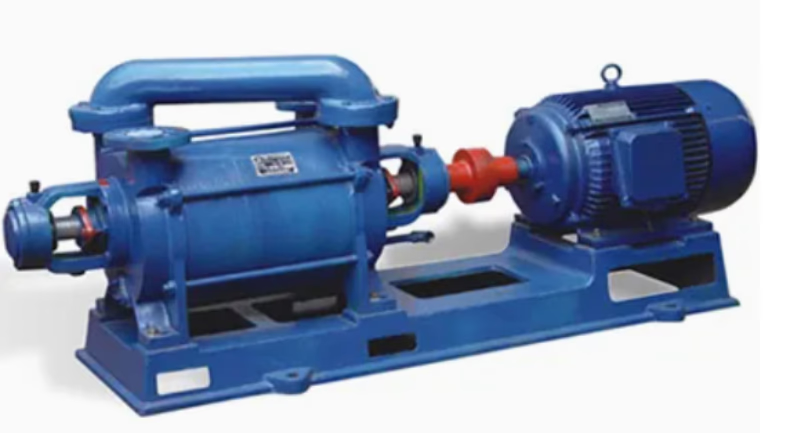
Machine OverviewMotor Rating: 105 KW
Running Speed: 745 RPM
MOTOR DE: 0906218
MOTOR NDE: BB0906218
PUMP DE: 22319CC
PUMP NDE: 22319CC
Problem: Bearing damage on Pump DE Bearing
Vacuum pumps play a critical role in water injection plants by removing dissolved gases and air from injection water. Effective gas removal helps reduce the risk of corrosion in pumps and pipelines and prevents issues associated with gas bubbles and cavitation.During routine condition monitoring, an assessment of a vacuum pump identified abnormal vibration levels and signs of bearing deterioration at the pump drive-end. Vibration analysis and demodulation techniques were used to identify the defect, monitor its progression, and support maintenance planning.
The Challenge
The initial survey identified elevated vibration levels at the pump DE bearing, indicating a developing mechanical fault. Further analysis revealed abnormal frequency components consistent with an inner-race bearing defect.Despite recommendations to replace the bearing, the replacement was delayed because the required spare part was unavailable. During this period, the defect continued to progress, increasing the risk of equipment breakdown and unplanned downtime.
The key objectives were to identify the bearing fault, track its severity, and provide actionable recommendations to minimise operational risk.
Vibration Analysis and Fault Diagnosis
Spectrum & Timewaveform (Demodulation, Acceleration and Velocity)
waveform
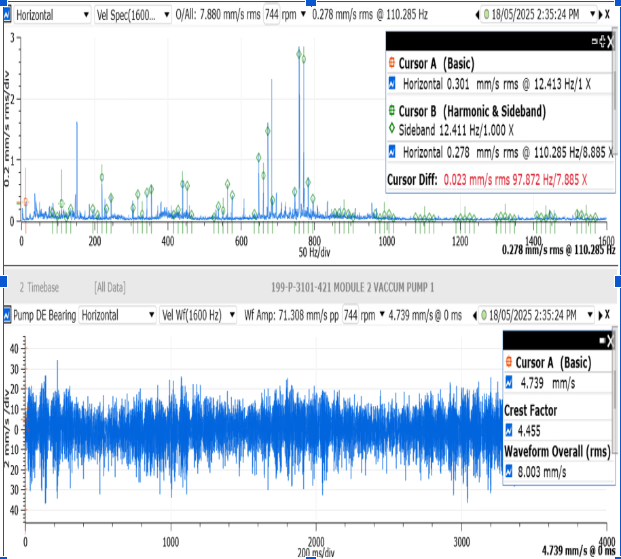
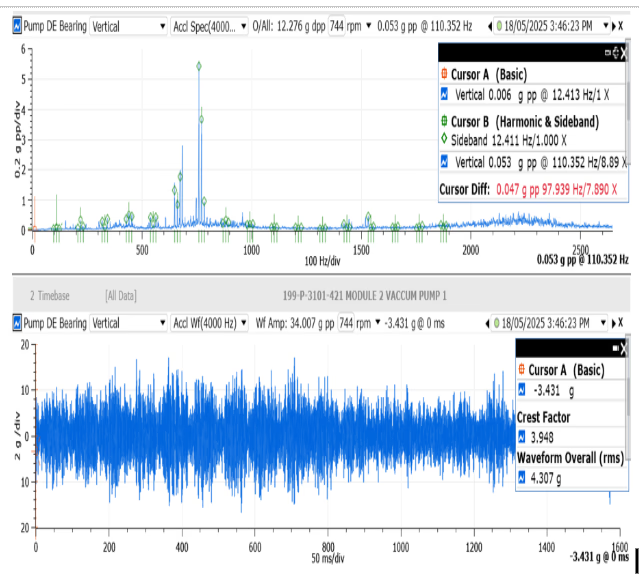
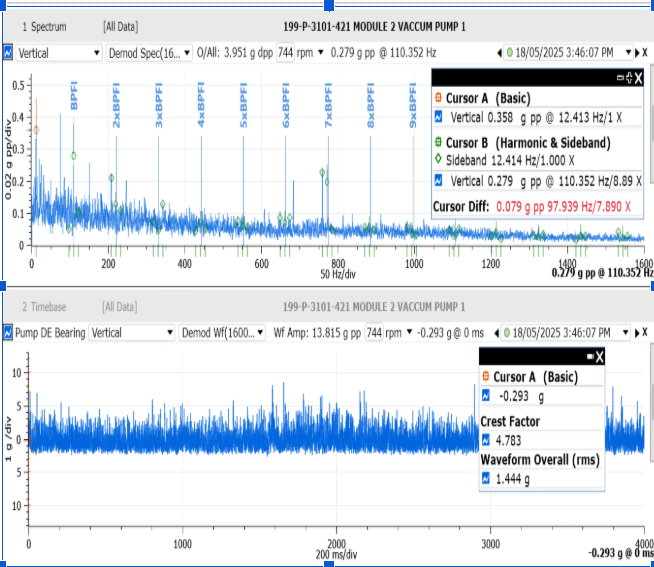
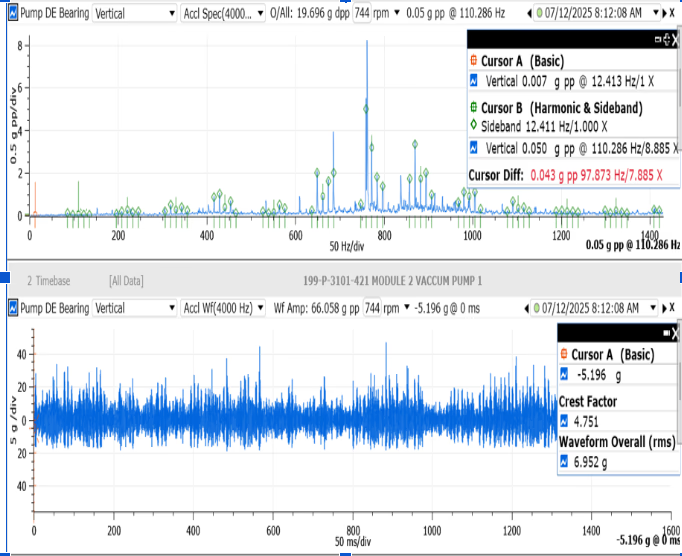
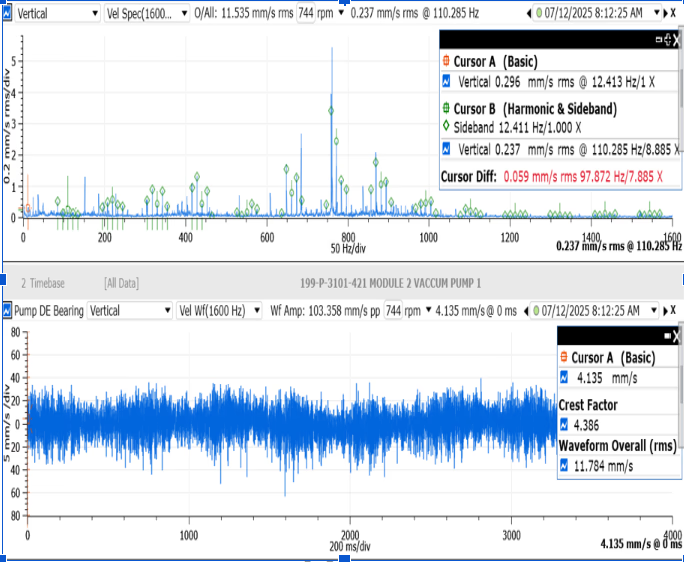
During the initial survey on 18 May 2025, the following abnormalities were detected at the pump DE bearing:
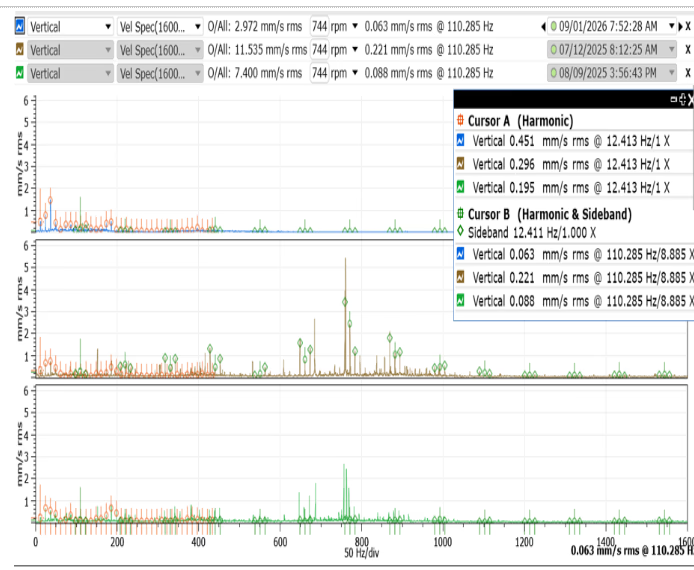
Overall vibration velocity of 7.8 mm/s RMS, exceeding the acceptable limit.
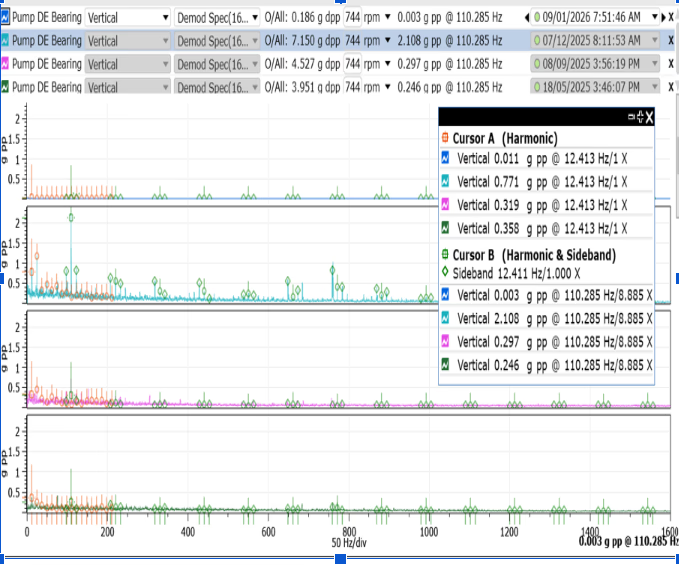
Demodulation amplitude of 3.9 g pp.
Acceleration amplitude of 12.3 g pp.
A prominent non-synchronous frequency at 110.3 Hz, corresponding to approximately 8.9 times the running speed.
Significant 1× sidebands, harmonics, and severe impacts in the acceleration and velocity time waveforms.
The detected frequency matched the ball pass frequency of the inner race (BPFI) for the SKF 22319CC bearing. These findings confirmed significant bearing deterioration, classified as an advanced Stage 3 defect.
Monitoring the Progression of the Bearing Defect
Subsequent vibration surveys demonstrated that the bearing condition continued to deteriorate while the replacement was pending.
September 2025: Persistent Bearing Defect
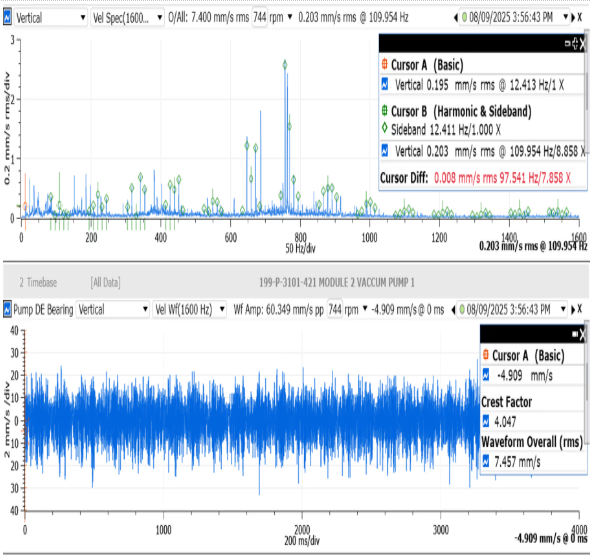
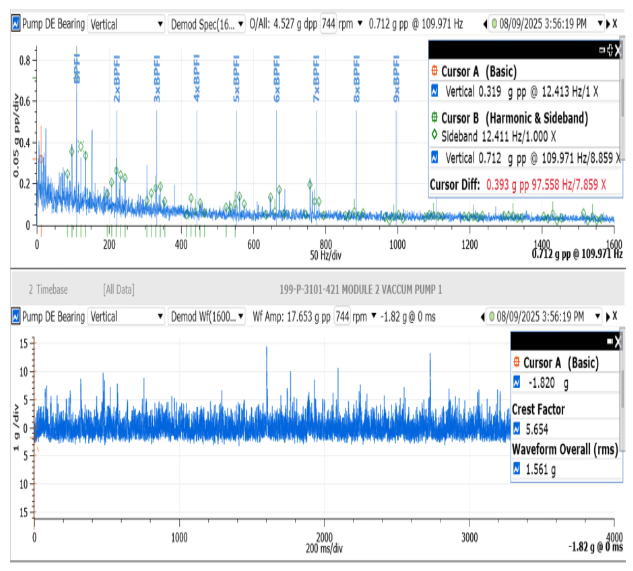
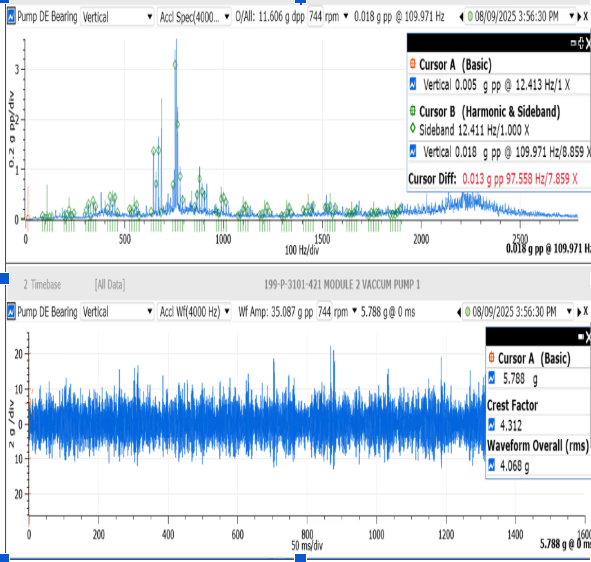
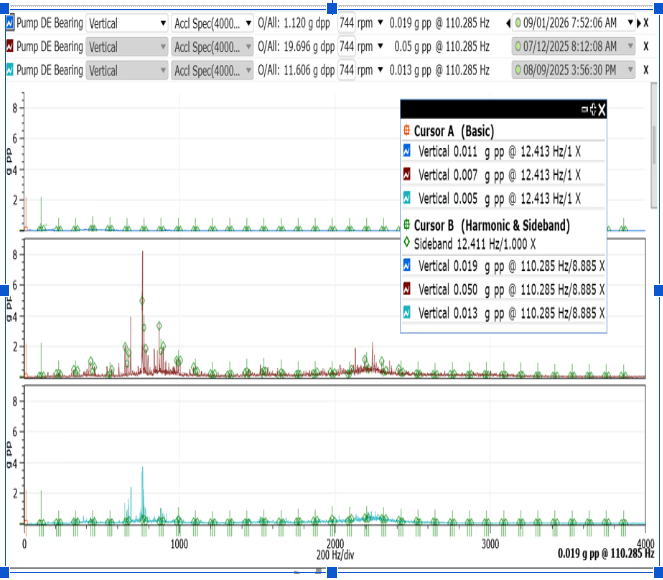
During the survey on 8 September 2025, the overall vibration velocity remained elevated at 7.4 mm/s RMS. Demodulation and acceleration amplitudes measured 4.53 g pp and 11.6 g pp, respectively.The abnormal 110.3 Hz frequency and its harmonics remained present. Since a replacement bearing was unavailable, the site team increased the use of standby equipment while arranging the required spare.
December 2025: Escalation to Stage 4
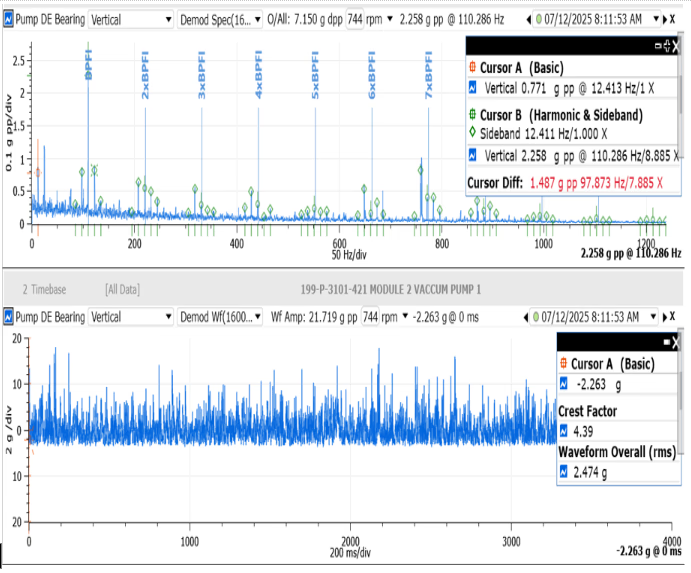
By 7 December 2025, the condition had deteriorated further:
Overall vibration velocity increased to 11.5 mm/s RMS.
Demodulation amplitude rose to 7.2 g pp.
Acceleration amplitude increased to 19.7 g pp.
The 110.3 Hz bearing defect frequency and prominent 1× sidebands persisted.
Abnormal metallic rubbing noise and elevated bearing temperature were observed.
The combined vibration signatures, abnormal noise, and elevated temperature indicated a severe Stage 4 bearing defect. Immediate replacement was strongly recommended to prevent further deterioration and potential equipment failure.
Corrective Action
In December 2025, the client replaced the defective pump drive-end bearing.A follow-up vibration survey was conducted on 9 January 2026 to verify the effectiveness of the maintenance intervention. Vibration spectra, demodulation measurements, acceleration values, and operating conditions were reassessed.
Results After Bearing Replacement
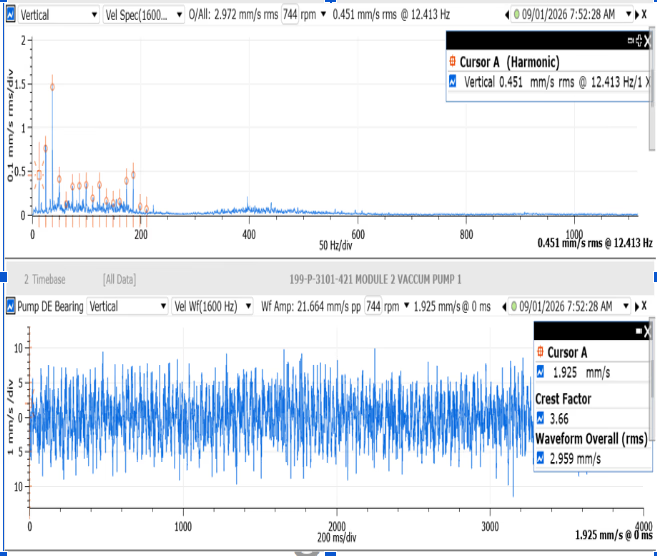
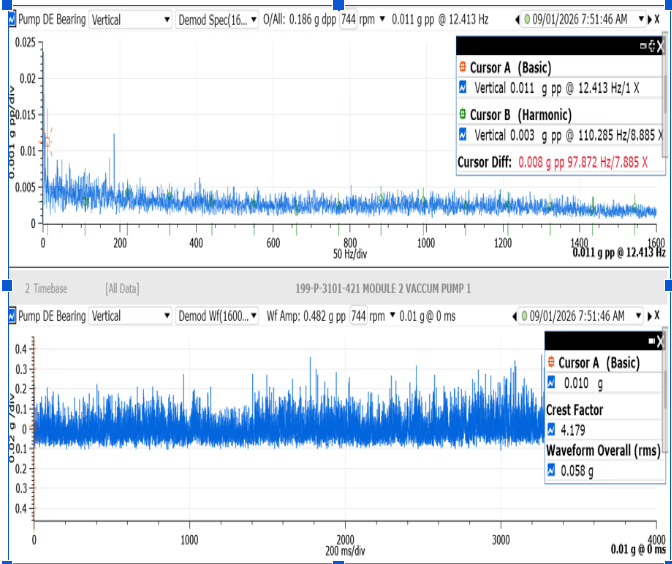
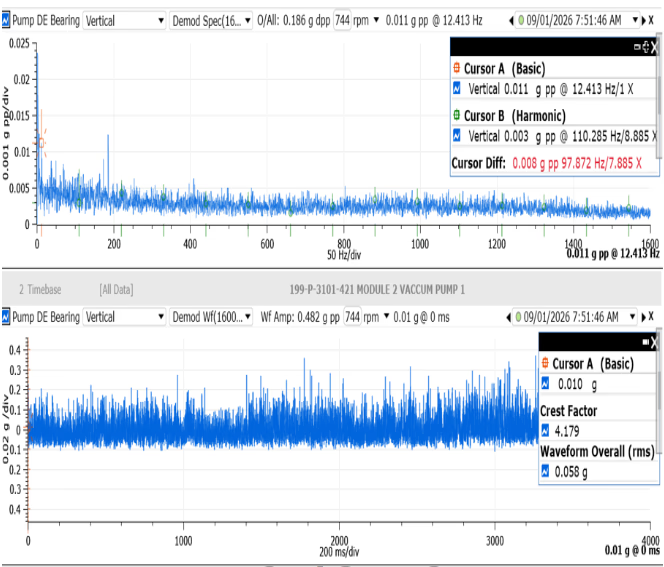
The post-maintenance assessment confirmed a substantial improvement in the pump's condition.
Monitoring parameter
Before replacement
After replacement
Overall vibration velocity
11.5 mm/s RMS
2.97 mm/s RMS
Demodulation amplitude
7.2 g pp
0.18 g pp
Acceleration amplitude
19.7 g pp
1.12 g pp
Bearing defect frequency
110.3 Hz detected
No longer observed
Bearing temperature
Elevated
Normal
Operating noise
Abnormal metallic rubbing
No abnormal noise detected
The post-maintenance results demonstrated a significant reduction in vibration levels and the disappearance of the previously identified bearing defect frequency.
Key Outcomes
Early fault identification: The developing bearing defect was identified during routine condition monitoring.
Fault progression tracking: Periodic surveys documented the deterioration from Stage 3 to Stage 4.
Informed maintenance planning: The findings supported the decision to prioritise bearing replacement.
Post-maintenance verification: Follow-up measurements confirmed substantial reductions in vibration, demodulation, and acceleration amplitudes.
Reduced operational risk: Timely corrective action helped prevent an unplanned equipment breakdown and unscheduled downtime while reducing maintenance labour requirements.
Conclusion
This vacuum pump case study demonstrates the importance of continuous condition monitoring in identifying and managing bearing defects in critical industrial equipment.Through vibration analysis, demodulation, and periodic trend assessment, the developing bearing fault was identified, its deterioration was documented, and corrective maintenance was prioritised. Following the replacement of the pump drive-end bearing, vibration levels decreased significantly, abnormal defect frequencies disappeared, and bearing temperature and operating noise returned to normal.
Key Takeaway: Proactive vibration monitoring enables maintenance teams to identify bearing defects, assess fault severity, plan corrective action, and verify equipment health after maintenance—helping improve reliability and minimise the risk of unplanned downtime.
Protect Your Critical Assets with Assetconditionmonitoring.com
AssetConditionMonitoring.com supports industrial reliability programmes with machinery vibration analysis, condition monitoring, infrared thermography, ultrasound bearing inspection, lubricant analysis and other specialist engineering services.Whether you need to investigate abnormal machinery vibration, assess the condition of rotating equipment or develop a proactive maintenance strategy, our team can help identify the appropriate monitoring approach for your operational requirements. You can refer to our case studies to improve equipment reliability.
Discuss your equipment reliability challenges and condition monitoring requirements with us