
What is Infrared Thermography for Electrical Inspection?

How Modal Analysis in Condition Monitoring Detect Structural Problems

How partial discharge affects Insulation performance
What Types of Motor Faults Can MCSA Detect?
Gearbox Vibration Analysis: How To Find Gear Faults Through Vibration Signals

Construction Vibration And Noise Monitoring UAE

What Is Pump Cavitation and How to Avoid It
Why Pump Alignment Is Critical for Reliable Industrial Operations ?
How Does an Acoustic Camera Work?
What is Partial Discharge Testing?
How FEA Analysis Improves Structural Performance & Reliability?
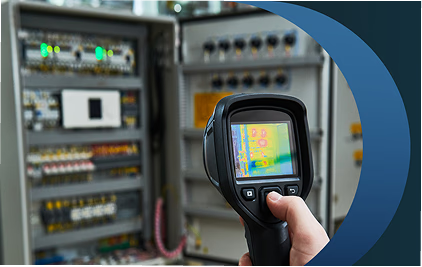
Infrared thermography is a non-invasive inspection method to study the condition of electrical equipment by detecting and visualising heat patterns. With the help of an advanced thermal imaging camera, it generates heat maps that highlight temperature fluctuations to help spot unusual heating, loose connections, overloaded components and potential failures. Infrared thermography seamlessly integrates predictive maintenance by detecting faults early before they lead to safety hazards or equipment failure.
- Non-contact inspection method
- Uses thermal cameras to spot heat signatures
- Generates a heat map depicting heat compositions in different areas
- Aids in predictive maintenance for electrical assets
- Uses different colors to show heat intensities and anomalies.
What Issues Can Thermographic Inspection Detect in Electrical, Mechanical, and Building Systems?
Thermography Inspection transforms the asset reliability and upkeep of your electrical, mechanical or building systems profoundly. Thermography Inspection is a robust predictive maintenance tool that uses infrared technology to pick up abnormal heat patterns before they become a failure. In electrical systems, thermography detects loose connections, unbalanced loads, and circuit overloads.
In mechanical assets, thermography identifies misalignment, lubrication issues, bearing wear and excess friction. In building systems, IR thermography detects insulation defects, air leakage, moisture ingress and hidden structural faults. With timely intervention, thermographic inspections significantly improve asset reliability, enhance safety and support proactive maintenance for industries. The following are some of the major issues thermography can detect:
Overheating - detects excessive heating spots that may indicate faulty electrical components or circuit overload.
Insulation defects- thermography detects the gaps, voids, and compromised insulation in buildings and structures that may cause energy loss and safety hazards.
Moisture Intrusion- shows moisture buildup in walls, roofs, or machines that can damage the structure, promote mold growth and cause inefficiency.
Electrical faults - Electrical hot spots in panels, connections, and equipment can be easily identified using thermography inspection.
Mechanical wear- thermography identifies temperature variations in mechanical systems that may indicate misalignment, friction or escalating failure.
Refrigerant leaks- thermography testing reveals anomalies in HVAC systems that could indicate leaks or inefficiencies.
Industries that do electrical or mechanical maintenance and quality assurance activities must adopt regular thermographic testing in their routine maintenance work to ensure the integrity and safety of their crucial components.
Why is Infrared Thermography Important?
Thermographic inspection becomes essential in situations where quality, safety and reliability of equipment and machinery are critical. Conventional methods are effective but time-consuming and mostly invasive, requiring skilled and experienced professionals to diagnose and determine the asset health, but with the advent of innovative technologies, the detection of underlying faults is made simple and non-invasive in most cases. The following are some serious situations where thermographic testing becomes handy:
1. Electrical System Maintenance:
- Thermography testing is a game-changer for efficient electrical system maintenance and repairs. It is used to detect overheating in electrical assets such as transformers, circuit breakers, switchgears and more.
- Overheating in electrical assets might indicate loose connections, overload, or component failure. Thermography testing provides precise fault detection in these electrical systems that are otherwise difficult to spot, enabling corrective actions in time.
- Thermography inspections conducted at regular intervals help spot underlying faults and enable corrective action before they become problems, aiding preventive maintenance.
2. Creating strategic Diagnostics:
- Thermographic testing detects insulation defects in buildings, helping to spot poor insulation quickly; damaged insulation can lead to energy loss, excess heating, and increased power consumption.
- Thermography can locate areas where moisture intrusion is present. The presence of moisture can lead to structural integrity issues, mold growth and eventually structural damage. Detecting moisture presence early helps prevent damage to the asset.
3. Mechanical Assets Monitoring:
- Thermographic testing can effectively assess and monitor the bearing, motors and other machine components' temperature. An unusual increase in temperature may denote lubrication issues, misalignment or wear, which can lead to equipment or component failure and costly downtime.
- Thermal inspections can precisely detect leaks, blocks and insulation issues in fluid and steam systems, preventing energy loss and equipment damage.
4. Manufacturing and Quality Control:
- Thermographic inspection is quite beneficial to evaluate the materials used in sensitive industrial sectors such as aerospace and automotive.
- Thermal inspections can precisely monitor the processes involved in manufacturing, the thermography imaging evaluates deviations, ensuring product uniformity and process integrity.
5. Energy and Power Audits:
- Thermography inspections help identify energy consumption patterns, areas of energy loss and more. These data can be used to optimise energy consumption, reduce cost and improve user convenience.
- Thermal inspections help detect faults in solar panels and enable corrective actions, optimising energy production and utilisation.
When to Use Thermography Testing?
The thermographic inspection is particularly beneficial for numerous applications across industries. But these are the ideal situations to make use of a thermography scan:
- When the asset health diagnosis must be obtained quickly and for machines with moving or rotating parts.
- When it's beneficial to visualize the temperature variations across different areas of the facility.
- When early detection of potential faults is needed and to reduce overall maintenance costs
- To adopt a predictive maintenance strategy
- To ensure optimal efficiency of electrical systems
- To extend the operational lifespan of equipment
- To ensure facility and personnel safety
Steps Involved in Thermographic Inspections
Thermographic inspections use infrared rays emitted by machinery, as all objects emit infrared radiation that projects their temperature characteristics. Infrared cameras can effectively capture this radiation and produce thermal images. These thermal images guide and provide in-depth insights to maintenance teams, enabling them to assess the asset’s actual condition based on its thermal profile. Generally, the following steps are involved in thermographic inspections:
Step 1 External Surface Prep: usually, thermographic inspections are non-invasive, but to improve the reliability and the precision of the measurements, the external surface is cleaned to remove excess dirt, grime, dust or reflective materials.
Step 2 Actual Process: An infrared camera captures the area of the system under inspection. With the camera, the infrared radiation emitted by the test subject is then converted into a thermal image. The thermal image shows different colours representing the different temperature distributions across the object.
Step 3 Analysis and Interpretation: the images taken are thoroughly analysed to spot abnormal thermal patterns, to look for hot or cold spots, or thermal bridges, which can indicate underlying issues.
Step 4 Reporting and Documentation: The data retrieved and the inferences are properly documented and recorded for future use and maintenance. Anomalies identified are documented by their size, location and temperature readings. This data is used to evaluate the intensity of the issues and to plan a course of action, if needed.
Why Every Maintenance Plan Needs Infrared Thermography for Electrical Inspection
Every maintenance plan should incorporate IR thermography testing as it is essential to identify problems before they become catastrophic, leading to irreparable equipment damage, costly downtime, or posing safety hazards. By detecting abnormal heat signatures in switchboards, circuit breakers, cables, and other connections, thermographic testing can help the maintenance team to spot loose connections, overloaded circuits, unbalanced loads and deteriorating components early.
Infrared Thermography is a non-invasive, non-contact inspection technique that ensures and improves reliability and aids in predictive maintenance significantly. Prompt action and timely intervention are crucial especially in electrical assets. Spotting developing faults early allows the maintenance teams to take corrective action at the right time, preventing permanent equipment damage, reducing repair costs, and enhancing overall workplace safety as well as ensuring improved asset reliability.
What is Performed During Infrared Thermography Testing of Electrical Panels?
Continuous monitoring and maintenance of electrical switchgear and distribution panels are critical in commercial and industrial facilities. Any sudden and unexpected failures can lead to operational disruptions, production losses, and safety risks. IR thermography identifies escalating issues before they become serious and allows for timely corrective actions and supporting preventive maintenance, which makes a huge difference in asset reliability for industries and critical settings.
Infrared thermographic inspection shows abnormal heat patterns in energised electrical components showing anomalies if present, such as loose connections, overload, cold or hot spots or deteriorating equipment. This diagnostic technology is particularly beneficial for effective and efficient preventive maintenance programs, as they are non-invasive, improving equipment reliability, minimising downtime and improving overall electrical asset safety.
How is Thermography Testing of Electrical Panels Done?
The technician or the inspector visually analyses the component or equipment initially. The testing device is an infrared thermal still/video camera or thermal imager. These thermal cameras capture the infrared emissions from the object and generate thermal pictures.
The latest thermal cameras and devices are portable, compact and user-friendly. Since the IR thermography testing is a non-contact, non- invasive technology, testing can be done without needing to de-energise the equipment and the operations would not be disrupted.
Procedure for Thermography Testing of Electrical Panels
The following is a detailed thermography inspection procedure for testing electrical panels:
 The thermography testing is non-invasive; hence, the panel to be tested is kept energised under an adequate load.
- Inspect the electrical panel before opening it to identify any visible safety concerns or signs of overheating.
- If unsafe conditions are found, ideal corrective actions should be taken before starting the infrared inspection procedure.
- Open panel covers as needed to get a clear view of all components to be inspected.
- Additional disassembly may be needed to ensure complete access for thermal imaging.
- Ensure all critical components are clearly viewed and accurately captured by the infrared camera.
- Infrared inspections can be performed using either qualitative or quantitative assessment methods.
- Use suitable thermal imaging equipment with sufficient resolution to obtain clear, reliable images.
Benefits of Thermographic Testing
Thermographic testing provides numerous advantages to industries, manufacturers, and maintenance teams, especially when it comes to comprehensive maintenance schedules. The convenience it offers cannot be overstated; let us look at the following benefits:
Non-Contact and Non-Invasive: thermographic inspection spots temperature fluctuations without physically touching or disrupting the operations of the equipment being inspected.
Minimise Maintenance Cost: quick and early identification of faults prevents costly repairs, component replacements, unexpected breakdowns and any production downtime.
Real-Time Results: Thermal inspections provide instant data on asset temperature, which allows fast assessment of equipment status.
Fast Detection: With thermal imaging, technicians can quickly locate hotspots, defects and abnormalities before they become major problems.
High Sensitivity: Thermal cameras are ideal for detecting small temperature differences and can even detect minute variations, allowing the identification of developing problems.
Versatile: Thermography can be applied across different systems, including electrical, mechanical, building and process equipment.
Increased Asset Lifespan: Conducting regular thermal inspections helps maintain optimal asset condition, reducing wear and extending equipment life.
Safe and Reliable: thermographic inspection allows fault detection from a safe distance and is usually non-contact, non-invasive. This reduces safety hazards to personnel and assets.
Applications of Thermography in Maintenance
Considering the versatility of thermographic testing, it can be implemented across industries and different sectors, for instance, electrical facilities, manufacturing units, commercial spaces and more. Let us look at the four basic and crucial applications
Bearing Monitoring: Bearing health is pivotal in equipment with moving parts; the main issue causing bearing damage could be friction due to lubrication mistakes. The moving parts could come in contact with the bearing and cause damage, causing temperature fluctuations. With proper thermal imaging, the elevated temperature could be detected and underlying bearing issues can be found before damage sets in and causes bearing defects.
Electrical and Insulation Monitoring: Infrared thermography detects abnormal heat in electrical equipment, which allows identification of faults due to increased resistance and component damage. This is particularly ideal for planned maintenance, to reduce unexpected downtime, and improve safety by identifying insulation issues that could lead to fires or arc flashes.
Leak Detection: Air, fluid or coolant leaks are critical and can result in temperature fluctuations. The IR thermography testing can quickly pick up these issues and temperature variations, providing alerts to the personnel of the presence of a leak. This can be repaired before it becomes a major concern.
Temperature Analysis for processes: Thermography checks temperature patterns against set limits and historical trends to detect abnormal operating conditions. The precision of results largely depends on proper equipment upkeep, skilled analysis, and proper interpretation to support effective maintenance and continuous improvement.
Thermographic Inspection Tools
Thermographic inspection tools are advanced diagnostic instruments used to detect temperature variations in electrical, mechanical, and process equipment without physical contact. By using infrared technology, these tools help identify hotspots, overloaded circuits, loose electrical connections, insulation defects, bearing failures, and other developing issues before they lead to equipment breakdowns
1. Infrared Cameras:
- Handheld Cameras: these are portable devices that capture thermal images for on-site inspections of electrical, mechanical and building systems.
- Fixed Cameras: These are permanently installed cameras to continuously monitor the temperature of critical equipment.
- Thermal Cameras with SmartPhones: Compact attachments enable quick and convenient thermal inspections using a smartphone.
2. Thermography Software:
- Image Analysis Software: This software processes thermal images, identifies temperature anomalies and generates inspection reports.
- Monitoring Software: It tracks temperature changes in real-time and gives alerts when set limits are exceeded.
3. Calibration Equipment:
- Blackbody Caliberators: They provide a consistent temperature reference that ensures reliability and accuracy.
4. Environmental Control Tools:
- Heat and light protectors: these shields reduce the heat and glare of sunlight, wind and other external factors to improve thermal imaging accuracy.
Thermography Testing for Electrical Panels with assetconditionmonitoring.com
Thermography testing is an effective diagnostic method to spot and find overheating components, loose connections, load imbalances and insulation defects within electrical panels before they become serious issues. At AssetConditionMonitoring.com, we carry out infrared thermographic inspections, ensuring precision and reliable results. We deliver accurate measurements that help your assets thrive. We help you improve equipment reliability, enhance safety and reduce unplanned downtime through early fault detection and proper, timely maintenance.
As a leading provider of condition monitoring solutions, we offer an all-inclusive range of asset reliability services, including thermography testing, Partial Discharge (PD) testing, vibration analysis, asset health monitoring and more. Our skilled engineers use advanced diagnostic tools and technologies to provide reliable insights into equipment health, extending their serviceable life, and ensuring continuous operations.