
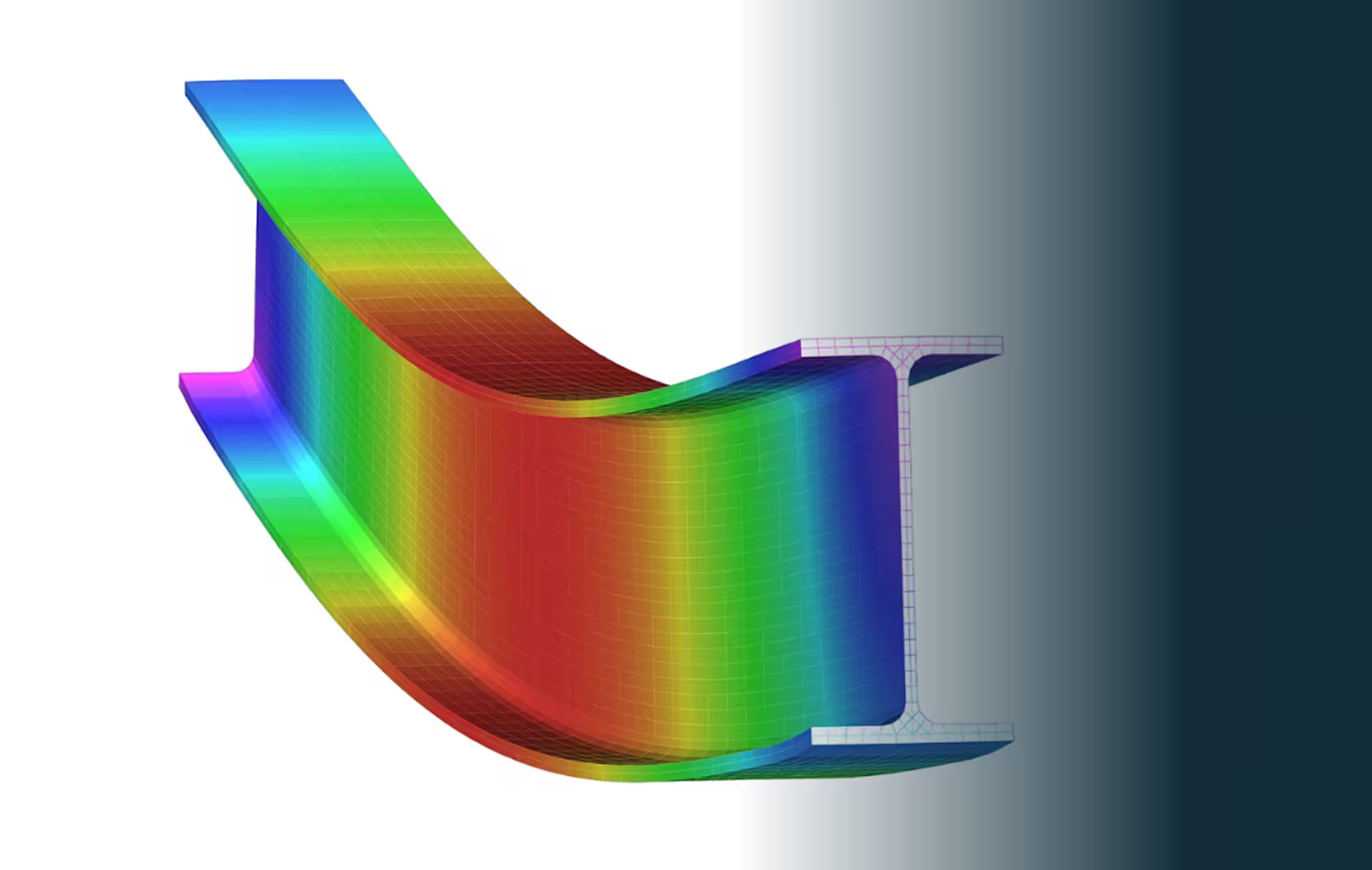

How FEA Analysis Improves Structural Performance & Reliability?
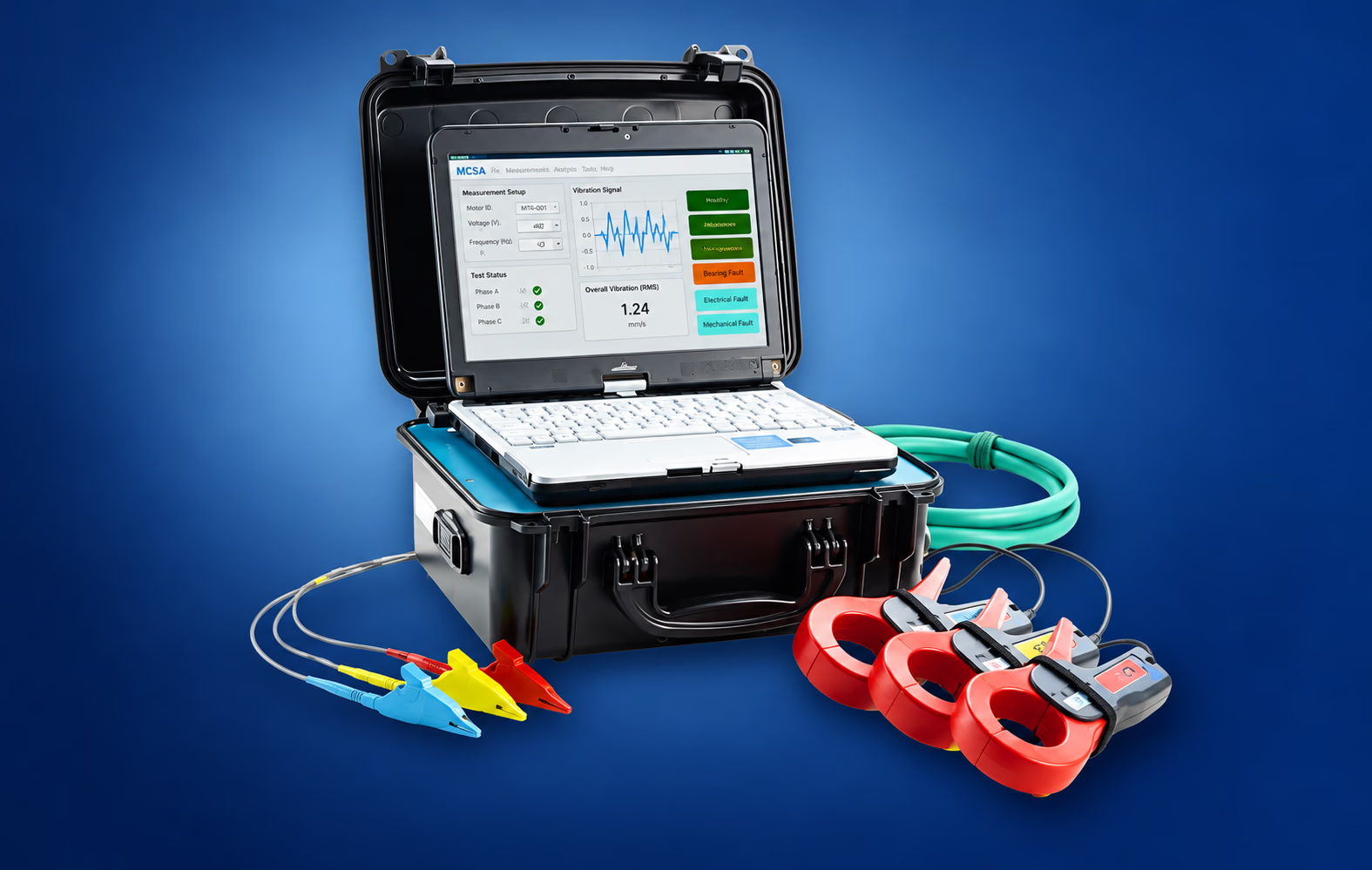
What Types of Motor Faults Can MCSA Detect?
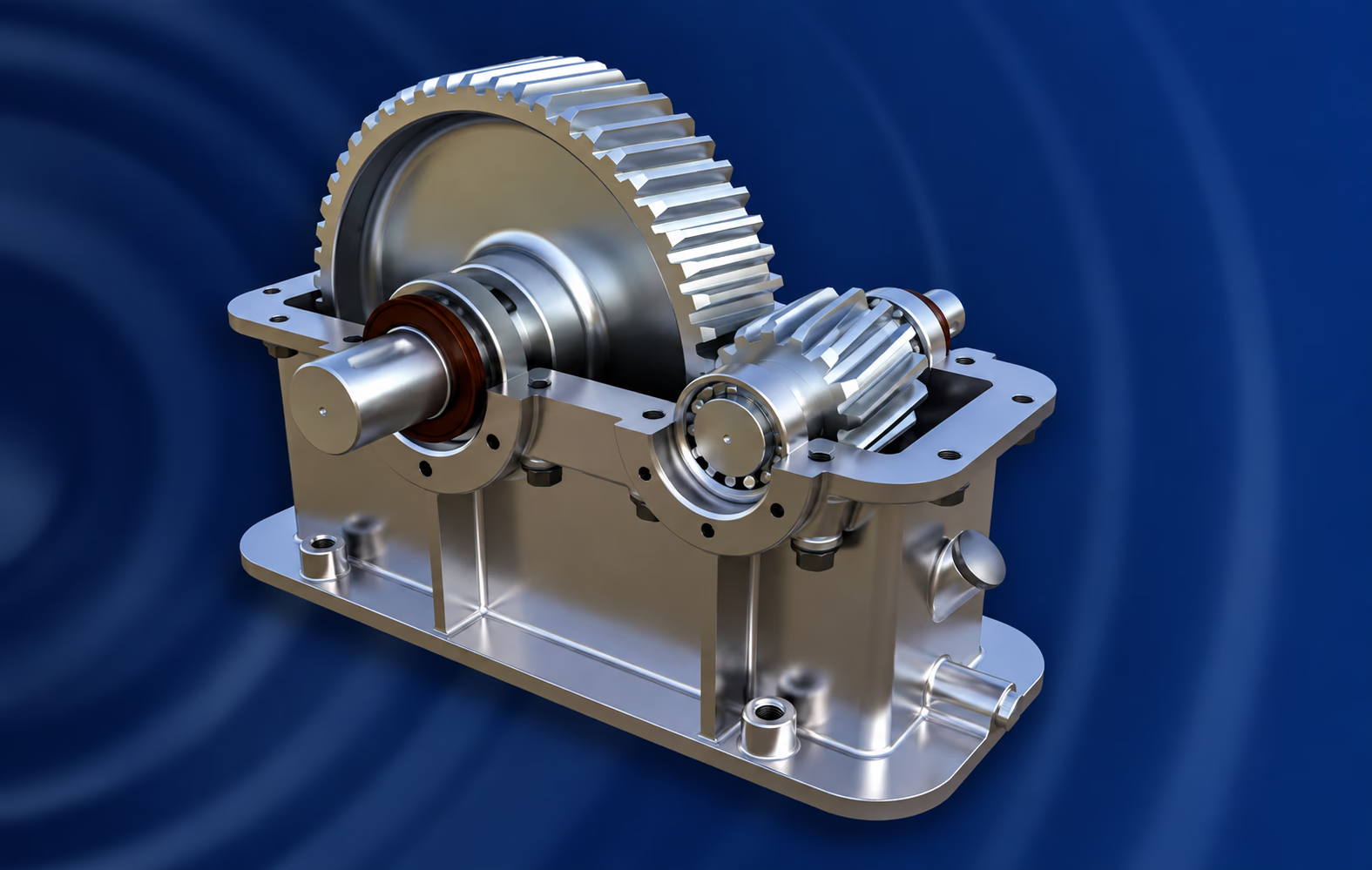
Gearbox Vibration Analysis: How To Find Gear Faults Through Vibration Signals

Construction Vibration And Noise Monitoring UAE
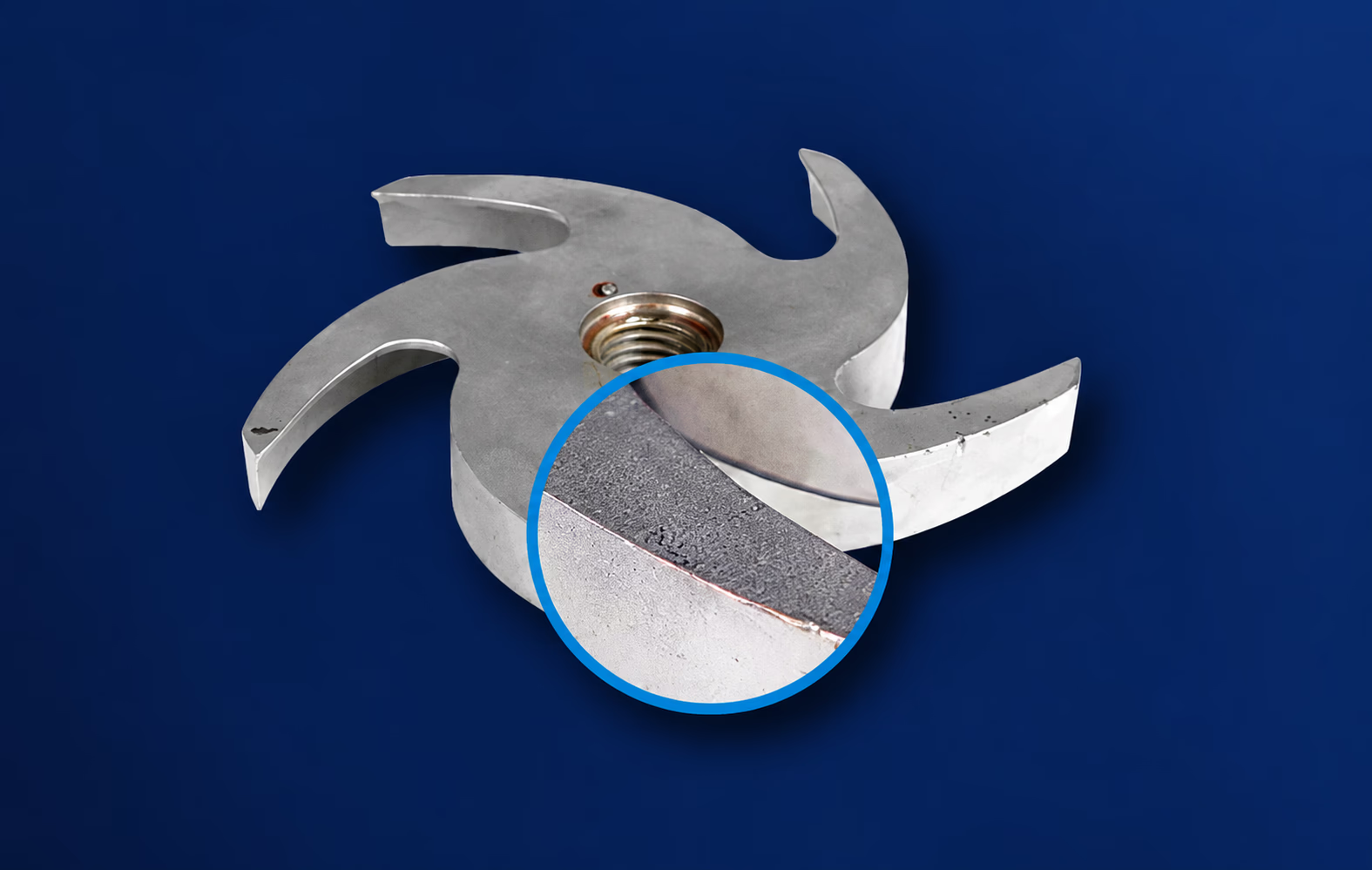
What Is Pump Cavitation and How to Avoid It
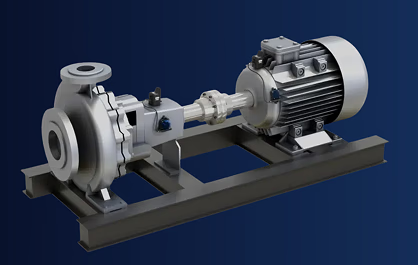
Why Pump Alignment Is Critical for Reliable Industrial Operations ?

How Does an Acoustic Camera Work?
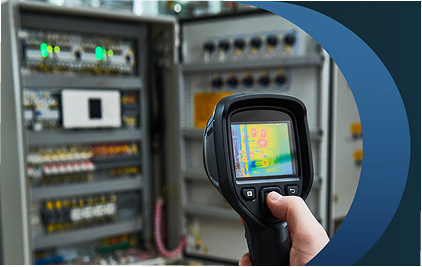
What is Infrared Thermography for Electrical Inspection?
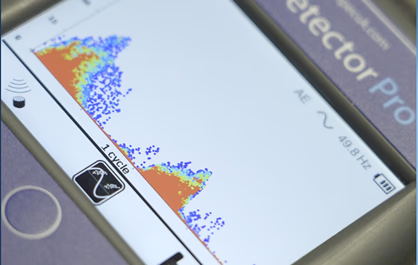
What is Partial Discharge Testing?
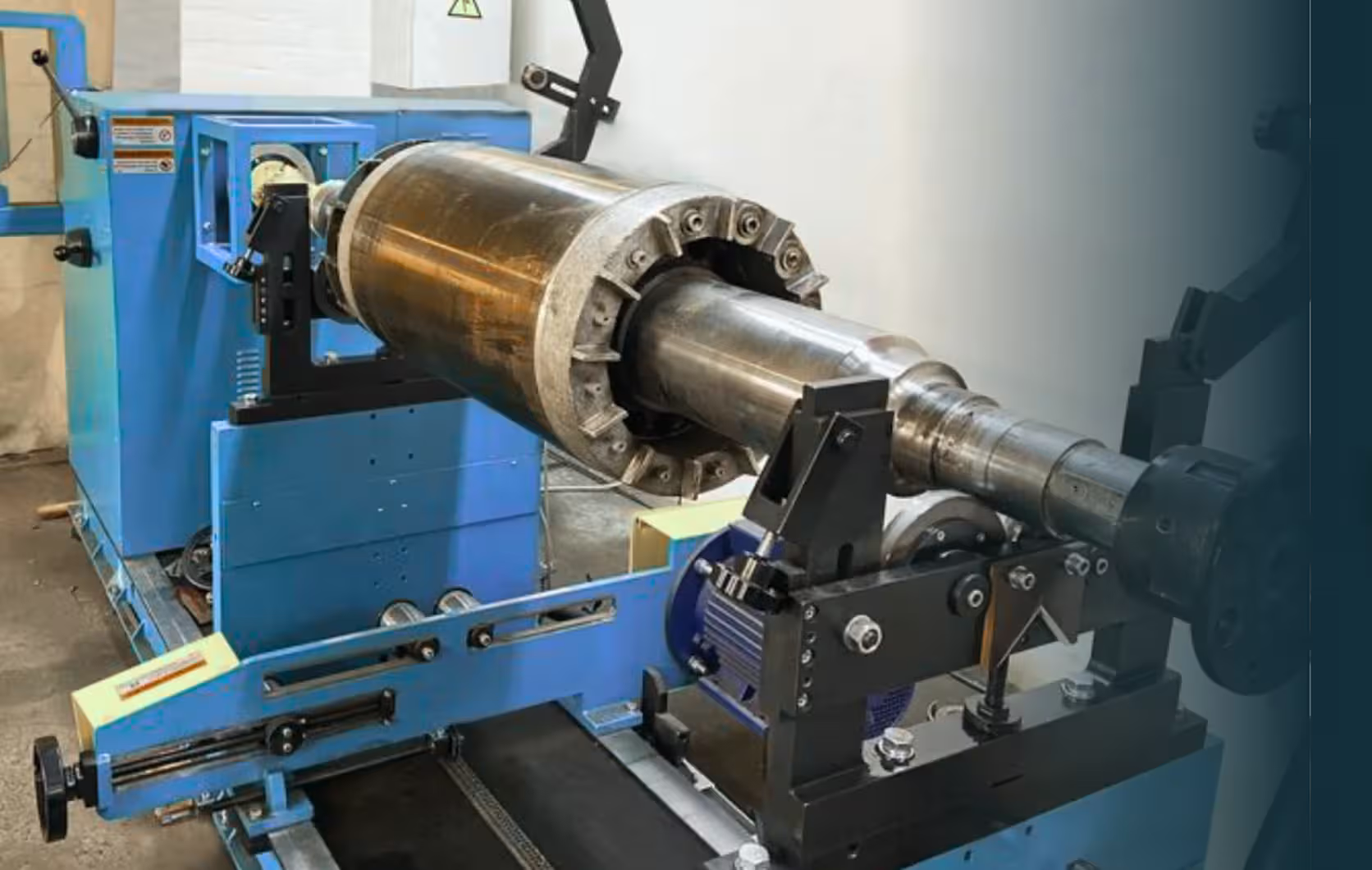
What is Dynamic Balancing: Why It Matters in Industrial Equipment
How Acoustic Emission Testing (AET) Detects Material Defects
Finite Element Analysis (FEA) is a numerical method that is used to solve complex engineering problems.Finite Element Analysis, or FEA, has become a cornerstone in engineering industries, equipping businesses to have the upper hand in predicting performance, reducing risk and optimising product quality way before the actual physical production starts.
Companies are expected to deliver products that are cost-effective, long-lasting, safe and optimised for performance. So, as we saw earlier, FEA becomes crucial in this regard. Engineers, with the help of FEA’s advanced techniques and simulations, can study how components respond to different physical conditions without relying solely on prototypes or trial-and-error, both of which are either expensive or time-consuming.
The ways FEA has transformed the industries are profound. From industrial pipelines, bridges, and aircraft components to consumer products, this tool has enabled engineers to recognise potential setbacks early in the design phase. The way it's capable of simulating real-world scenarios makes it crucial in optimising material usage, improving design efficiency, and aims to improve structural performance, delivering high-quality solutions to industries worldwide.
Finite Element Analysis: Understanding the core
In today’s fast-paced and competitive environment, high-quality performance and reliability are no longer optional; it is imperative. But what is the actual process? FEA divides a larger system into smaller, simpler elements. These elements are connected at nodes, forming a mesh that represents the structure that is under analysis.
By applying various laws and boundary conditions, engineers can calculate how each element behaves and combine the results to understand the overall system performance. This way, how a structure or a component behaves can be determined way before it actually exists.
FEA can handle complex geometries and loading conditions that are often difficult or impossible to solve using traditional analytical techniques. Be it finding stress concentration in a mechanical part or analysing heat channels within a system, FEA provides detailed insights enabling better decisions with precision.
As technologies advance, modern FEA software integrates advanced algorithms and visualisation tools to interpret results and optimise designs, making it more adaptive and reliable. It supports a wide range of applications, which include structural, thermal, and fluid simulations, making it a versatile tool.
How FEA Works: The Math Behind The Simulation
FEA works by solving complex mathematical equations that explain physical behaviour, such as stress-strain relationships or heat transfer. These equations are derived from basic principles like equilibrium, compatibility, and material constitutive laws.
The test structure is divided into finite elements, and each element is given equations that relate forces and displacements. These equations are then assembled into a whole system that represents the entire model. By applying boundary conditions and loads, the system of equations is solved to understand unknown features such as displacement, temperature, or pressure.
Although the underlying mathematics can be complex, modern software automates these calculations, which lets engineers focus on interpretation and design improvement. But understanding the basics is equally important to ensure accurate modelling and precise results.
What Is the FEA Process and How Does It Work?
The FEA is a careful process that must be executed with precision. Generally, it involves the following steps:
Step 1 Pre-Process
It is the first and most important step in FEA. It involves analysing the model, creating geometry, defining material properties and generating a mesh. For example, if a pipeline is being analysed for the capacity, the pipeline would be divided into systems, these systems into components and the components into elements using a grid of elements to generate meshing.
The mesh divides the model into finite elements, which then determines the accuracy of the results. Engineers define boundary conditions like loads, constraints and interaction at this initial stage. Proper setup is required that matches the real-world conditions as closely as possible; any mistake in this phase can lead to inaccurate results and affect the overall efficiency.
Step 2 Processing
The processing stage is where the actual simulation takes place. The software solves the mathematical equations generated during pre-processing. Depending on the model's complexity, this step can take from a few seconds to several hours. During this stage, the system calculates values like stress, strain, displacement or temperature distribution. Advanced systems are used to handle non-linearities, large deformations and complex interactions. The accuracy of this phase largely depends on the model setup and the computational techniques used.
Step 3 Post-Processing
Post-processing involves interpreting and analysing the results achieved from the simulation. Skilled engineers use graphic tools to visualise the real conditions, like stress distributions, deformation patterns, and other crucial parameters.
FEM vs FEA: Understanding the Difference in Engineering Simulation
Finite Element Method (FEM) and Finite Element Analysis (FEA) are closely connected concepts in engineering simulation, but they serve different purposes. While FEM is the mathematical foundation, FEA is the practical simulation process used by engineers to evaluate real-world structural performance.
What is FEM (Finite Element Method)?
Finite Element Method (FEM) is a numerical and mathematical technique used to solve complex engineering and physical problems. It works by dividing a large structure into smaller sections called finite elements, which are connected through nodes to form a mesh.
Mathematical equations are applied to each element to calculate how the structure behaves under different conditions such as:
- Stress and strain
- Vibration
- Fluid flow
- Dynamic loading
FEM provides the theoretical framework that allows engineers to analyse complex geometries and conditions that cannot be solved using traditional analytical methods.
What is FEA (Finite Element Analysis)?
Finite Element Analysis (FEA) is the practical application of FEM using advanced computer simulation software. It is a complete engineering analysis process used to predict the behaviour and performance of components and structures under real-world operating conditions.
In an FEA simulation, engineers typically:
- Create a 3D model of the component
- Define material properties such as elasticity, density, and thermal characteristics
- Generate the FEM mesh
- Apply loads, pressures, temperatures, or boundary conditions
- Run simulations using FEM equations
The software then generates graphical and numerical results, including:
- Stress distribution
- Deformation and displacement
- Thermal response
- Fatigue life
- Safety factors
- Failure prediction
These insights help engineers optimise designs, improve reliability, minimise material wastage, and detect potential failures before manufacturing begins.
Key Difference Between FEM and FEA
Depending on how the mass is distributed along the rotor, balancing is categorised into static and dynamic balancing methods. When static balancing focuses on an imbalance on a single plane, dynamic balancing deals with more complex settings involving multiple planes and motion effects.
FEM
FEA
Mathematical and numerical method
Practical engineering simulation process
Forms the theoretical foundation
Uses FEM principles through software
Solves equations for individual elements
Analyses complete structures and products
Focuses on calculations
Focuses on real-world performance evaluation
Benefits of FEA Analysis for structural performance and reliability
Efficiency in Design
Engineers can test several designs without needing to create physical prototypes. This not only speeds up the design process but also lets engineers identify the best design by comparing different scenarios and optimising parameters.
Cost Effectiveness
By reducing the need for physical testing and developing prototypes, FEA helps lower developmental costs. FEA also minimises material waste and prevents the risk of expensive design failures.
Improved product
FEA gives a detailed idea of how a product behaves under different situations and stimuli. This will give the engineers an advantage to optimise designs for strength, reliability, efficiency and durability. As a result, the product performance and quality would be enhanced.
Enhanced safety
Safety is another important advantage that comes along with using FEA. Finite Element Analysis identifies potential failure points and ensures structures can withstand loads within set thresholds and conditions. This significantly reduces the risks of accidents and ensures safety compliance.
Types of FEA: Different Finite Element Analysis Methods Explained
Several factors are considered when selecting the appropriate tools based on the various engineering problems involved. Some of the most common types of Finite Element Analysis are:
1. Structural Analysis: It evaluates how a component or structure responds to forces, pressure and loads. It helps determine stress, strain or deformation, ensuring the design can withstand operational conditions without failure.
2. Thermal Analysis: Thermal Analysis gives a clear picture of the heat profile and temperature distribution within a system. It is vital for components exposed to high temperatures to ensure proper heat management and to prevent overheating issues.
3. Vibration Analysis: Vibration Analysis analyses how structures respond to varying loads and oscillations. It helps identify natural frequencies and avoid resonance, which can otherwise lead to structural failure.
4. Fluid Dynamics Analysis: Fluid Dynamics Analysis, or as often referred to as, Computational Fluid Dynamics (CFD), studies fluid dynamics and determines how fluids interact with surfaces. It is particularly beneficial to analyse airflow, pressure distribution and fluid behaviour, improving efficiency and performance in pipelines, aerodynamic structures, and more.
FEA Vs CFD: Which is Better?
Finite Element Analysis (FEA) and Computational Fluid Dynamics (CFD) are both advanced simulation tools, but they serve different analysis types. FEA is mainly used to study the structural behaviour of components, covering parameters like stress, fatigue, deformation, vibration, and thermal profiles under applied loads. While CFD focuses on analysing the fluid flow, heat transfer, pressure distribution, turbulence, and airflow or liquid movement in and around objects.
Aspect
Finite Element Analysis (FEA)
Computational Fluid Dynamics (CFD)
Purpose
Analyses structural and mechanical behaviour
Analyses fluid flow and thermal behaviour
Application
Stress, strain, deformation, vibration, fatigue
Airflow, liquid flow, turbulence, and pressure distribution
Based On
Finite Element Method (FEM)
Fluid dynamics and Navier–Stokes equations
Used For
Solid structures and components
Fluids and gas movement
Which is Better
Best suited for structural analysis
Best for fluid and flow analysis
Applications of FEA Across Industries
FEA is widely used in real-world applications, for instance, Finite Element Analysis provides precision and detailed insights in bridge designs, aircraft wing analysis, pressure vessel testing and more. Here are some of the main industries that benefit from the advantages of Finite Element Analysis (FEA).
1. Manufacturing and Heavy Engineering Industries: In manufacturing, FEA is used to design machinery, tools, and equipment. Finite Element Analysis gives detailed insights into ways to optimise material usage and distribution, and improve product performance as well as durability, ensuring efficient production processes.
2. Oil & Gas, Energy, and Utilities: Finite Element Analysis is critical for power plants; FEA is useful for analysing pipelines, pressure vessels, and onshore and offshore structures. It ensures improved precision, safety and reliability in harsh environments, thereby reducing the risk of failures or leaks.
3. Automotive and Aerospace Sectors: In the automotive and aerospace industries, FEA is used to design feasible and efficient systems. FEA analyses fuel efficiency, performance, and safety while also meeting regulatory standards.
Why Choose AssetConditionMonitoring.com in UAE for FEA Services?
AssetConditionMonitoring.com, as the leading asset reliability and condition monitoring service provider, offers advanced tools, expertise and efficient workflows, helping reduce development time, improve design quality, all by ensuring strict compliance with industry standards and regulatory rules.
The importance of expert-driven FEA analysis cannot be overstated, which means FEA requires strong software knowledge and proper engineering understanding. At AssetConditionMonitoring.com, we provide expert-driven analysis with the help of our skilled and seasoned engineers to ensure accuracy and reliability. An experienced consultant brings not only knowledge but also the technical expertise, as precision is pivotal in these service strategies. Our team identifies critical issues, optimises designs and provides actionable solutions to improve product performance.