

Why Pump Alignment Is Critical for Reliable Industrial Operations ?

What Types of Motor Faults Can MCSA Detect?
Gearbox Vibration Analysis: How To Find Gear Faults Through Vibration Signals

Construction Vibration And Noise Monitoring UAE
What Is Pump Cavitation and How to Avoid It
How Does an Acoustic Camera Work?

What is Infrared Thermography for Electrical Inspection?

What is Partial Discharge Testing?
How FEA Analysis Improves Structural Performance & Reliability?
What is Dynamic Balancing: Why It Matters in Industrial Equipment
How Acoustic Emission Testing (AET) Detects Material Defects
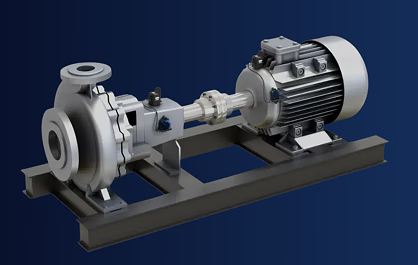
Pump alignment involves accurately positioning a pump and its driving motor so that both rotating shafts are aligned along the same centerline. Correct alignment is essential for minimizing vibration, reducing wear on bearings, and preventing damage to mechanical seals.
Pumps are something most of us have heard about from a young age, but have you ever thought about the important role they play in industries and heavy machinery? Pumps play a pivotal role across industries, be it oil refineries, water treatment plants, power stations, manufacturing facilities, or simple process units. They ensure smooth operations by moving liquids efficiently throughout different processes. But a pump can only be the workhorse or perform at its best when it is properly aligned.
Misalignment is a major reason, accounting for over 50% of malfunctions in rotating equipment, that causes issues like broken couplers, vibration and wear of bearing seals and more. Unaddressed and excessive misalignment can even damage mounts, pumps and motor casings.
In this blog, we will look at why pump alignment is so important, what issues may arise from pump misalignment, and ways to identify the warning signs. We will also share practical tips and best practices to maintain proper alignment, improve equipment performance, and reduce unexpected downtime.
What is Pump Alignment?
Certain industrial centrifugal pumps, like the long-coupled, have the pump and the motor shafts as separate units connected through a coupler. In normal conditions, these dual shafts will be parallel to each other having the same centreline. But when the centrelines of the motor shaft and the pump shaft are at an angle to each other, we can say that’s a misalignment, an angular one at that. There is another type of misalignment that occurs when the shafts are parallel, but the centrelines are horizontally or vertically displaced; this misalignment is Parallel misalignment.
Flexible rotors can tolerate a bit of misalignment. But if the misalignment exceeds their intended tolerance limits, it can cause wobbling, excessive vibrations, and increased noise levels, meaning operational hindrances, disrupted processes, safety risks and even a partial shutdown. From what we've seen so far, pump misalignment is an issue that needs to be addressed. Here is where pump alignment becomes absolutely necessary.
Pump alignment is the process of fixing the centrelines or the shafts of multiple rotating machines, which will allow them to work efficiently without causing any wobbling or vibration. This process involves adjusting the positions of a pump and its driving motor. The pump alignment process is versatile; even though alignment is done mostly on pumps and driving motors, this can also be applied to turbines and compressors, specifically to machinery with rotating parts.
Why Precise Shaft Alignment Is Critical for Pump Performance and Efficiency
For a pump to operate properly and efficiently, precise shaft alignment is essential. Basically, to ensure that power is transferred smoothly from the motor to the pump through the coupling, directly or indirectly connected. Even a small alignment error can create unnecessary stress on the rotating parts, compromising performance and shortening the equipment's lifespan.
So, pump misalignment generally falls into three categories:
Radial (Offset or Parallel) Misalignment: This occurs when the motor and pump shafts remain parallel but are offset sideways, where their centerlines no longer match.
Angular Misalignment: This happens when the shafts are at an angle instead of being parallel, preventing the coupling from transmitting power evenly.
Axial Misalignment (End Float): In this case, the shaft centerlines are aligned, but one of the shafts moves back and forth along its axis, leading to unwanted axial movement.
Combined Misalignment (Angular + offset): this is when the shafts are both offset and meet at an angle; this is the most common type of misalignment.
Major Types of Pump Misalignment
As we have seen so far, Shaft alignment is a matter of concern when considering rotating equipment; even the tiniest deviation in the alignment of the driving and driven shafts could cost dearly. Reduced equipment reliability, exorbitant maintenance costs, compromising bearing, seals and couplings life and whatnot. The three major forms of shaft misalignment are Angular, parallel misalignments and the Combined Misalignment, which is the combination of both angular and parallel misalignments.
Angular Misalignment
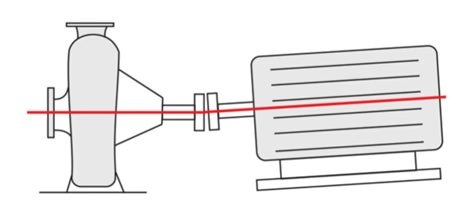
Angular Misalignment happens when the centrelines of the driver and driven shafts meet at an angle instead of being parallel; the coupling faces also would not be parallel. The gaps between coupling faces will be different around the circumference and might occur in horizontal or vertical planes. The root cause of this type of misalignment can be improper equipment installation.
Soft foot, pipe strain, thermal strain and more. It has adverse effects on the equipment as well. For instance, coupling wear and fatigue, intense vibration, increased bearing loads, etc., this causes cyclic bending forces to the shaft.
Parallel Misalignment
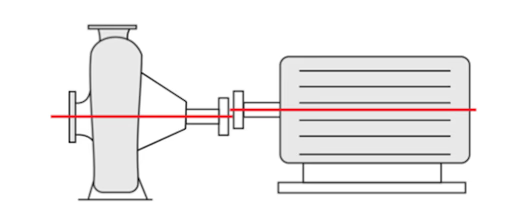
Parallel misalignment, also known as offset misalignment, is seen when the centerlines of two coupled shafts are displaced from one another when they remain parallel. In this type of misalignment, the shafts do not intersect; instead, one shaft will be laterally offset from the other.
The primary characteristic of parallel misalignment is that the shaft centerlines remain parallel throughout their length, even though they are offset. Common causes of this type of misalignment are incorrect machine positioning at the time of installation, foundation movement or settlement, thermal expansion, and excessive vibration which causes the machine to shift from its original alignment.
Combined Misalignment
It is rare to witness purely angular or offset misalignment as such; in practical scenarios, machines show a combination of both these conditions. Combined misalignment is the combination of both angular and offset misalignment that may occur simultaneously. Advanced laser shaft alignment systems measure angular and offset errors together. Several other techniques identify shaft alignment issues as well. For example, vibrational analysis, thermal imaging and more.
What happens if pump misalignment is ignored?
Leaving a pump misaligned can create several operational and maintenance issues gradually. Let us take a glimpse of those issues:
Early component wear: Bearings, seals, and shafts undergo extra stress and wear out faster than you think.
Leakage: Misalignment can damage sealing components, lead to fluid leaks that increase maintenance costs and create environmental or safety risks.
Intense vibration and noise: Excessive vibration and unusual noise are the first signs of misalignment, it affects the pump performance and shorten the lifespan of equipment.
Reduced efficiency: A misaligned pump uses up more energy to do literally the same amount of work; this increased power consumption reduces overall system efficiency, which is the classic sign of misalignment
Increased operating costs: Repeat maintenance, repairs, unplanned downtime, higher energy bills, and premature component replacement are all drawbacks of unaddressed misalignments.
How to Align Shafts: Step-by-Step Guidance
Proper shaft alignment is one of the most important steps in ensuring a pump operates efficiently and reliably. The goal is to make sure the motor shaft and pump shaft rotate along the same centerline during normal operation. Even slight angular or parallel misalignment can lead to excessive vibration, premature component wear, and reduced efficiency.
A typical pump shaft alignment process includes the following steps:
The first inspection of the equipment The process usually starts by examining both the pump and the motor for any visible damage, loose components, worn parts, or installation issues. The technician then makes sure the foundation is stable, the mounting bolts are secure, and the coupling is in good condition before beginning any alignment fixing.
Performing a preliminary alignment Before using precision alignment equipment, carry out a basic alignment check to identify any major misalignment. This rough alignment helps bring the shafts closer to their correct position, making the final alignment process faster and more accurate.
Measure the alignment Use an appropriate alignment tool, like the laser shaft alignment system, to accurately measure both horizontal and vertical misalignment. Modern laser alignment tools give precise readings and guide the user through the measurement process, which reduces errors.
Make the necessary corrections Using the measurement data, adjust the position of the motor or driver until the shafts are correctly aligned. This may involve correcting soft foot issues, moving the machine horizontally, or adding and removing shims beneath the machine feet to achieve proper vertical alignment. Thermal growth and operating conditions should also be considered during this stage.
Verify the final alignment Once all adjustments have been made, repeat the measurements to confirm that the shafts are aligned within the manufacturer's recommended tolerances. If needed, make further adjustments until the alignment results are consistent and within the acceptable limits.
Taking the time to align pump shafts correctly helps improve equipment reliability, reduces maintenance costs, minimises energy losses, and extends the service life of critical components.
Pump Alignment Procedure
Pump alignment is actually positioning the pump and motor so that their shaft centerlines are properly aligned; it is essential to ensure efficient power transmission and smooth operation. Precision alignment is normally performed using laser alignment systems, dial indicators, feeler gauges, or other measuring tools.
After the basic alignment, the system should be rechecked as it reaches normal operating conditions; there are chances of thermal expansion and mechanical stresses that can change shaft alignment. Routine vibration monitoring and timely alignment inspections are also essential, as increased vibration might indicate an escalating misalignment. A comprehensive and strategic alignment procedure improves equipment reliability, minimises component wear, reduces energy losses, and extends the service life of rotating machinery.
Common Causes of Misalignment in Pumps
Pump misalignment can develop because of several reasons; the following are some of the common causes.
Installation mistake: Following the manufacturer's installation instructions is important; failure to follow them will lead to pump misalignment that happens at the installation.
Bearing Wear and Damage: Worn bearings can cause shaft deflection, leading to misalignment.
Soft Foot Condition: Uneven motor feet can distort and wobble the machine, causing soft foot conditions.
Improper Pipe Alignment: Pipe stress is another cause of pump misalignment, which can shift the pump and affect alignment.
External Shocks and Vibration: Mechanical impacts and excessive vibration can change the alignment as the time passes.
Thermal Expansion: Temperature variations can cause component movement and result in misalignment.
How Do You Fix Misalignment in a Pump?
After measuring the misalignment, the technicians adjust the pump or motor till the desired alignment is achieved and the shafts are properly aligned.
Loosen the mounting bolts so the motor can move.
Move the motor horizontally, vertically, or add/remove shims to achieve the correct alignment.
Tighten the mounting bolts and recheck the alignment again.
Use proper tools for minor alignment corrections if needed.
Confirm that the shafts are within the intended alignment limits and double-check if all bolts and components are securely tightened.
How Proper Pump Alignment Helps Maximize Equipment Performance
Proper pump alignment is a critical element in achieving dependable and efficient equipment performance. Many studies show that shaft misalignment is responsible for about 50% of pump and rotating machine malfunctions, which means accurate alignment is a decisive and essential step before a pump can be functional.
During the commissioning, the pump and motor alignment should be double-checked and fixed if necessary. A well-aligned pump would show no signs of unusual vibration, the bearing and seal life wouldn’t be compromised, there wouldn’t be excess power consumption and the efficient functioning of both the pump and motor can be guaranteed.
By making proper alignment a routine element of installation and further maintenance, the technicians can keep equipment in top working condition, ensure reliability, reduce maintenance costs, and guarantee long-term pump performance.
Benefits of Pump Alignment
Proper pump alignment is more than just a routine maintenance technique; it is crucial in making sure the rotating equipment is well cared for, ensuring reliable performance and contributing to the enhanced equipment life. When the pump and the motor are properly aligned, the whole system works efficiently, with less mechanical stress.
Some of the important benefits of proper alignment are:
Improved operational efficiency, reducing energy loss, reduced power consumption, lower operational costs and ensuring peak efficiency
Equipment longevity is achieved due to reduced stress on the components, improving asset life.
Significant reduction in mechanical stress, meaning it reduces the likelihood of mechanical failure, sudden outage, and reduces safety hazards.
Reduced vibration and noise due to proper alignment, leading to a safer work atmosphere.
Pump Alignment Checklist
Before performing pump alignment, make sure to follow these steps to achieve reliable results:
Follow Lockout/Tagout (LOTO) procedures to make sure the equipment is isolated.
Carefully inspect the pump, motor, and connected components for any visible wear, damage, or installation issues.
Double-check if the alignment tools are properly calibrated and are ready for use.
Check the baseplate and foundation for stability and support.
Check if the bolts and couplings are in proper condition.
Remove any dirt, debris, or obstructions that compromise the alignment process.
Record alignment results and adjustments for future needs.
A systematic alignment process is essential to improve equipment efficiency, to reduce downtime, and extend the pump life.
Pump Alignment Tools
Pump alignment tools vary from the compact set of hand tools to advanced precision tools. Some of the tools available in the market are:
- 1.
Laser Shaft Alignment Tools- for fast, precise, and reliable shaft alignment results in complex alignments. Often involve manual calculation and measurement.
- 2.
Reverse Dial Indicator- to measure angular and parallel shaft misalignment with increased precision.
- 3.
Straightedge and feeler Gauge- this tool is particularly beneficial for basic and initial rough alignment checks.
- 4.
Precision Shims- are used to adjust the height in pumps or motors for vertical alignment.
- 5.
Caliper or Steel Rule- to measure the distances and check component positioning.
In pump alignment, laser shaft alignment tools are specially designed for their precision and convenience. Laser alignment tools use a laser beam and a range of detectors to check the alignment of the pump. The laser shaft alignment technology gives quick feedback and alignment calculations. Main advantages of laser technology are:
Quick setup and instant feedback
High precision and convenient
Less human error
Can store and track alignment data for future maintenance.
Precision Laser Shaft Alignment by ACM
AssetConditionMonitoring.com is a leading provider of pump laser shaft alignment services across the UAE and the Middle East. We help industries achieve equipment reliability, reduce downtime, and improve operational efficiency with advanced technology. With over two decades of hands-on industry experience, we bring precision and efficient alignment solutions employing the most advanced laser alignment technology because we know that ensuring optimal machine performance and extended equipment life is crucial to hassle-free operations.
As an ISO-certified company, AssetConditionMonitoring.com is fully committed to delivering services that meet the global standards of quality, safety, and reliability. Our partnership with renowned technology leaders such as Fluke Reliability allowed us to provide our clients with the industry's best condition monitoring solutions, which are also backed by the latest diagnostic tools and our expert engineers.
Precision laser shaft alignment systems from AssetConditionMonitoring. Com gives accurate measurements, allowing us to fix even the complex shaft misalignment quickly and efficiently. Proper alignment is critical in reducing vibration, minimising bearing and seal failures, lowering energy consumption, and significantly extending the operational life of pumps, motors, compressors, fans, and other rotating equipment.
We offer advanced Laser Shaft Alignment for pumps, motors, compressors, fans, blowers, and rotating machinery, Machinery Vibration Analysis and Diagnostics, Machine Health Assessment and Reliability Consulting, Precision Maintenance Solutions and more.
At AssetConditionMonitoring.com, we bring together skilled engineers, modern technology, and years of practical experience to provide precise shaft alignment and condition monitoring services. By helping businesses improve equipment performance, reduce downtime, and maintain reliable operations, we support safer and more efficient industrial processes.