
How Does an Acoustic Camera Work?
Gearbox Vibration Analysis: How To Find Gear Faults Through Vibration Signals

Construction Vibration And Noise Monitoring UAE

What Is Pump Cavitation and How to Avoid It
Why Pump Alignment Is Critical for Reliable Industrial Operations ?
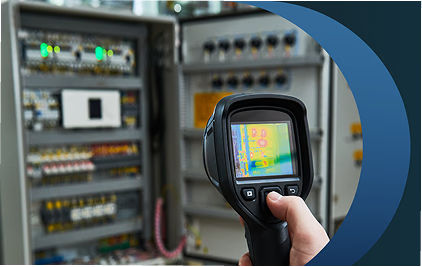
What is Infrared Thermography for Electrical Inspection?
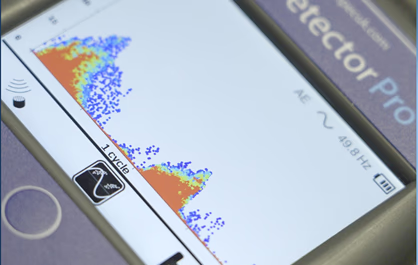
What is Partial Discharge Testing?
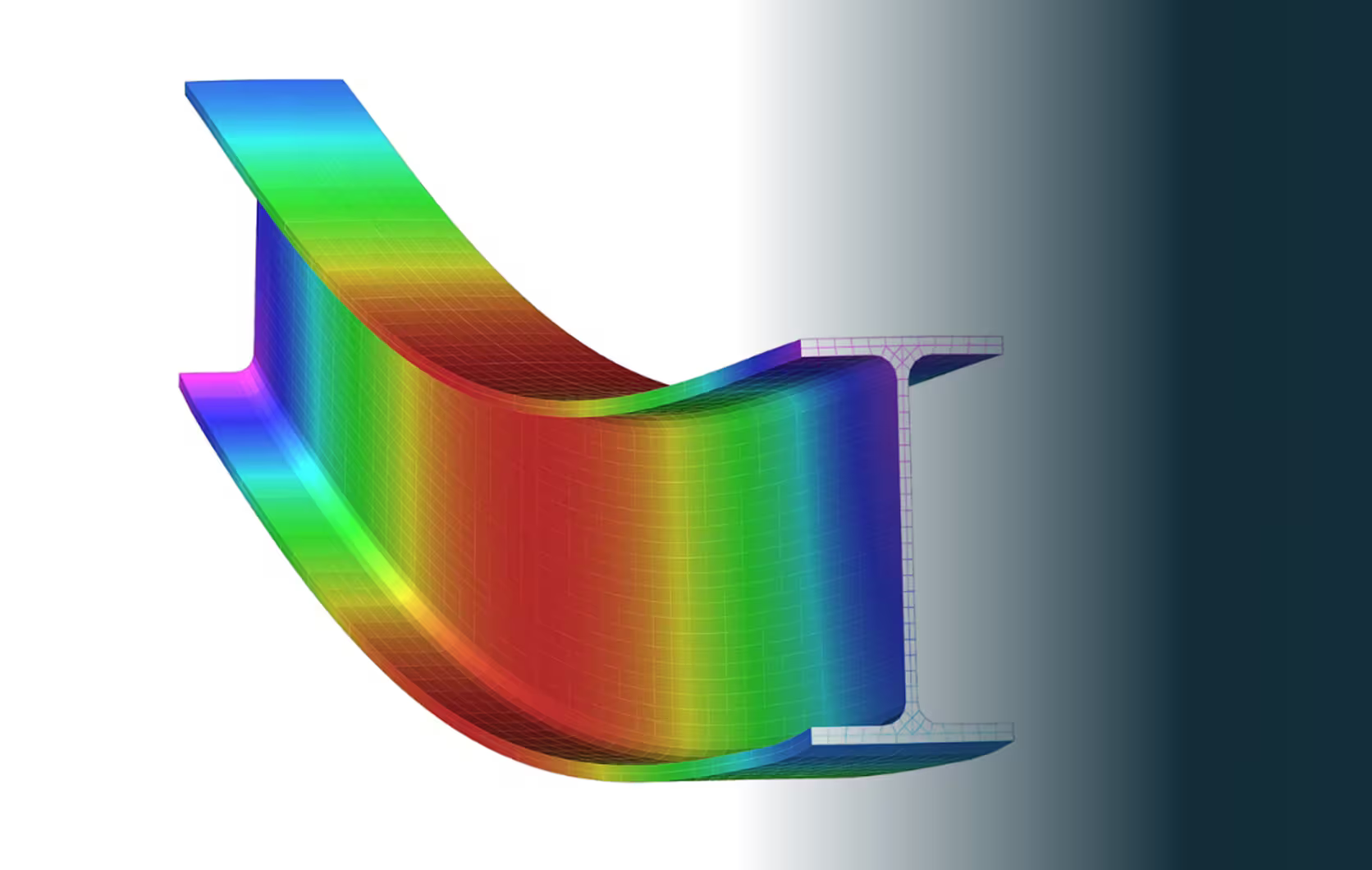
How FEA Analysis Improves Structural Performance & Reliability?
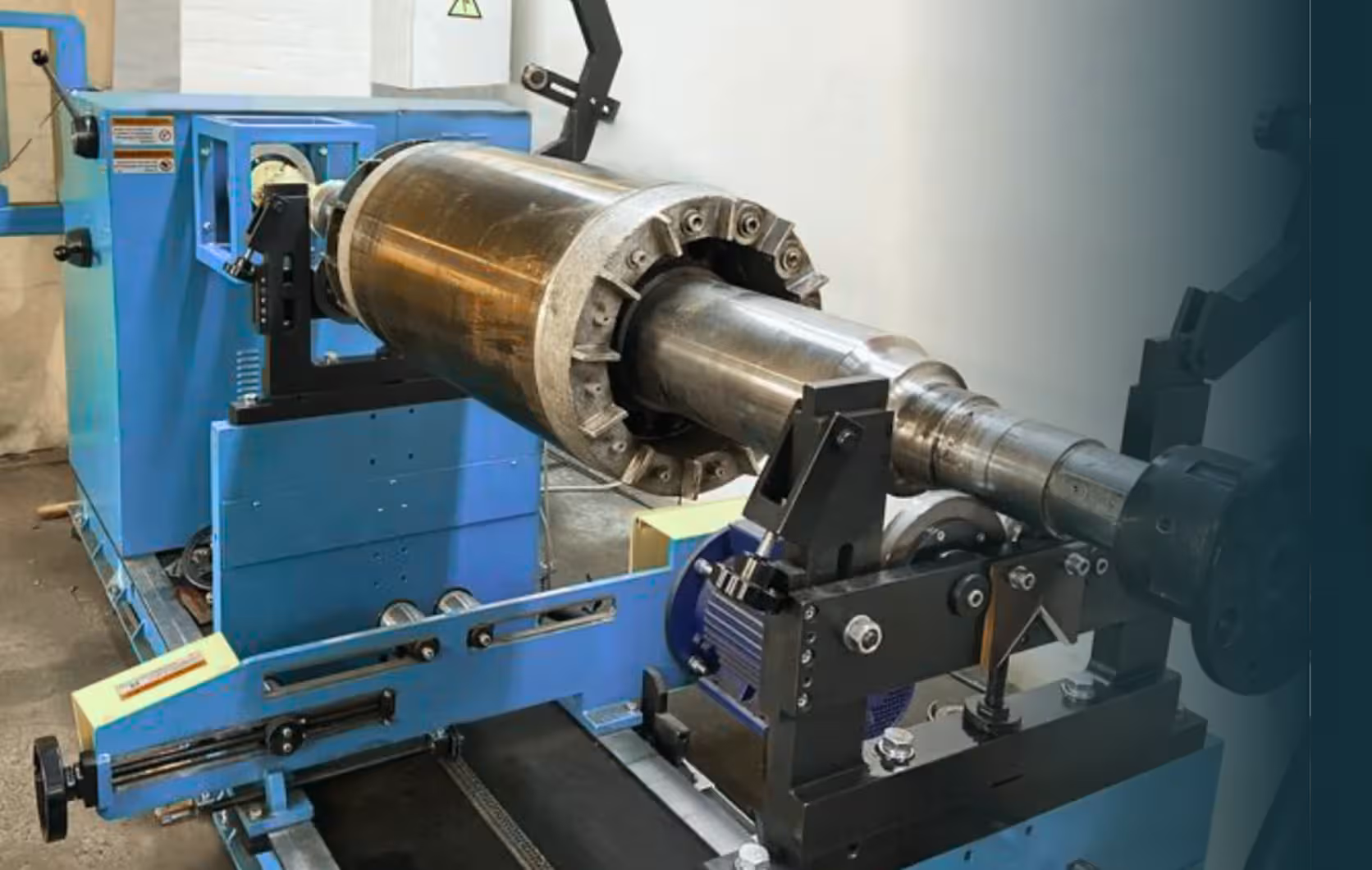
What is Dynamic Balancing: Why It Matters in Industrial Equipment
How Acoustic Emission Testing (AET) Detects Material Defects
Vibration Sensors for Industrial Condition Monitoring: Types, Applications, and Benefits
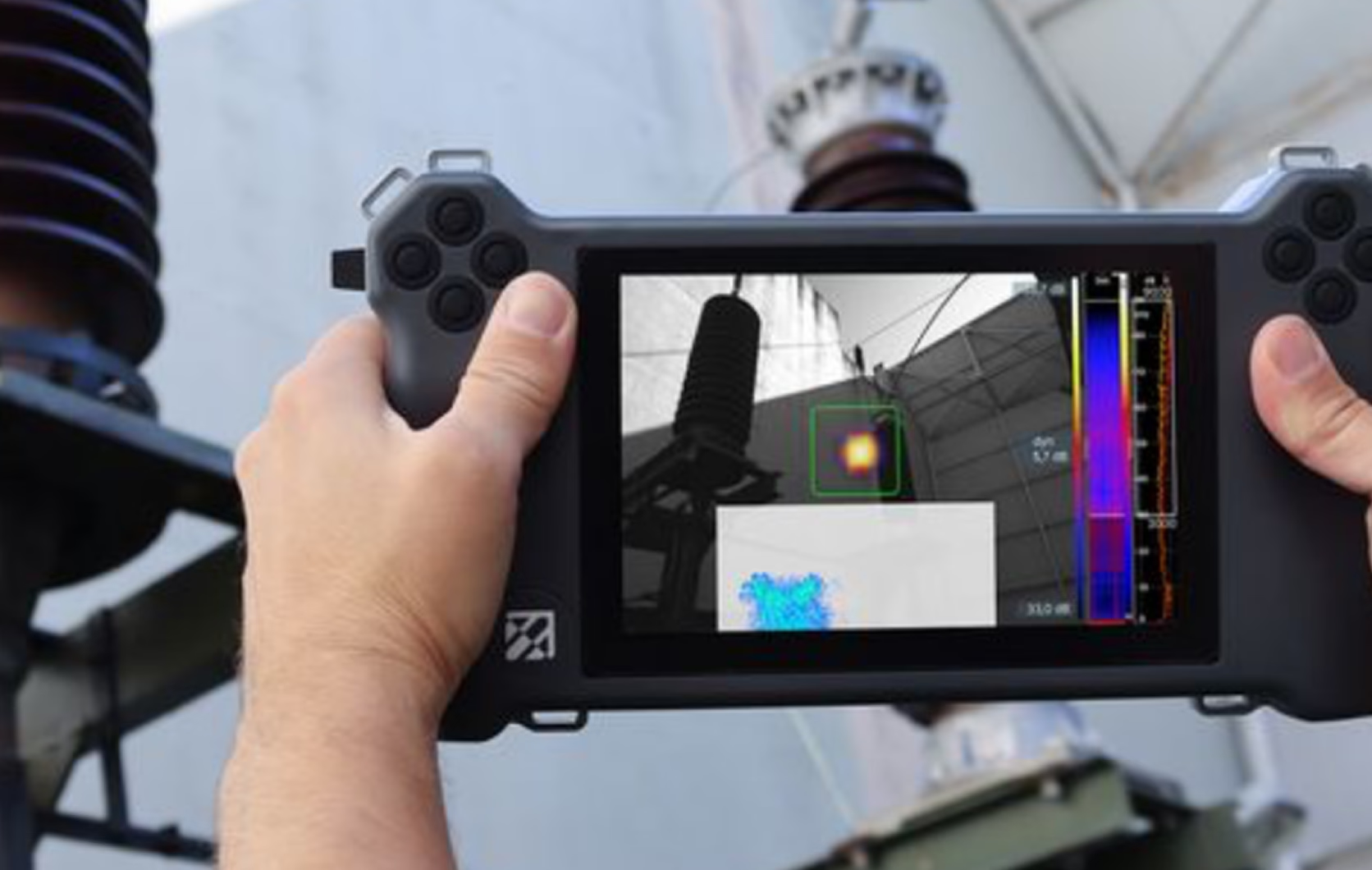
Acoustic cameras are diagnostic tools that visually present the sound source and its intensity. It is as straightforward as it gets, but how exactly? By principle, it captures sound waves using a microphone array, processes signals and converts the result into a colour-coded soundmap in real time over a live optical video feed.
An acoustic camera can locate and visualise sound emissions using beamforming algorithms. It is almost like a thermal camera; the difference is that it detects sound instead of heat. The acoustic cameras help find the exact location of leaks, identify faulty bearings, and spot electrical partial discharge (PD).
The technology is beneficial to countless industries across the world, for instance, in the aerospace and automotive industries; an acoustic camera is used for noise, vibration and harshness tests. Similarly, acoustic cameras are widely used to improve industrial maintenance, energy utilities, manufacturing and building acoustics.
Acoustic camera technology is transforming the industries by detecting, visualising and resolving asset issues by making sound visible. Using advanced beamforming algorithms combined with integrated thermal imaging, the acoustic camera accurately captures and visualizes sound sources across both audible and ultrasonic frequencies.
Acoustic Camera: Accurate Sound Source Detection
We know that an acoustic camera is an industrial inspection device that equips technicians to visualise sound and locate its source precisely. By integrating the advanced beamforming technology with an array of highly sensitive microphones, the system catches acoustic emissions in audible and ultrasonic frequency ranges. These signals are processed live, displayed as a visual acoustic map overlaid on a digital image. This is particularly beneficial for the users to get the exact location of the leaks, electrical discharges or any hidden mechanical faults.
The scope of thermal imaging along with the acoustic camera, is much more beneficial, as it creates an additional level of diagnostic layer by correlating sound patterns together with temperature variations. This duo-combo improves fault detection accuracy and enables faster, more precise decision-making during inspections.
Acoustic cameras detect compressed air leaks, partial discharges, and unusual noise in rotating machinery, all of which support predictive maintenance; the faults and anomalies can be detected and addressed before they become costly failures.
The result: improved asset reliability, less downtime, improved workplace safety and overall maintenance efficiency.
Why are Acoustic Cameras Important:
- Ideal for incorporating into preventive maintenance schedules
- Gives real-time visual maps of sound emissions
- Generates acoustic images and videos
- Detects leaks and PD in equipment
- Improve plant efficiency and asset reliability
Explore advanced beamforming and thermal imaging technology to locate acoustic signals and enable precise leak detection in compressed air systems and fault identification in electrical systems.
Acoustic Camera and the Beamforming Technology
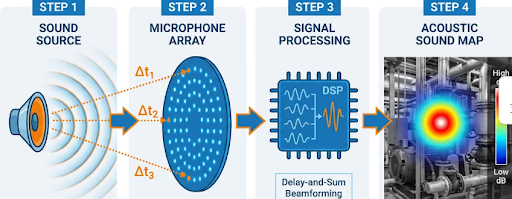
An acoustic camera works on the principle of beamforming, a key technology of signal processing that precisely localises sound sources. The camera has an array of highly sensitive microphones arranged in a specific pattern around the optical camera.
When a sound is generated from a compressed air leak, electrical discharge or mechanical error, the sound waves go through the air and reach the microphones but at a bit different times, as each microphone is at a different distance from the source. The beamforming processor analyses the time delays and amplitude variations from all microphones to locate the sound sources.
The processed data is converted into a live colour-coded acoustic map overlaid on the visual data captured by the integrated system. High and intense sound sources are shown in warm colour tones like yellow and red whereas lower and less intense sounds are seen in cooler shades like green and blue.
This precise and intuitive visual map helps the technicians to study the asset, identify the faults even in complex industrial settings without interrupting normal operations.
How Beamforming Locates Sound Sources
Sound Detection: When a sound is generated, for instance from a compressed air leak or Partial discharge, the sound or the acoustic wave reaches each microphone in the array at slightly different times because of the varying distances between the sound source and each microphone.
Time Delay Estimation: The acoustic camera's processor measures these minute differences in arrival time and uses them to reach an estimate of the direction from which the sound is originating.
Signal Alignment: Using beamforming algorithms, the processor uses calculated time delays to match the signals received by all microphones.
Source Identification: The aligned signals are put together and analysed. The system then identifies the location as the probable source of the acoustic emission and filters out any background noise.
Acoustic Image Generation: This process is repeated over every point within the camera's view. The data is then converted into a colour-coded acoustic map and overlaid on the live optical image, after which the users can accurately visualize and locate sound sources in real time.
Acoustic Imaging technology for Preventive Maintenance
The non-intrusive design and intuitive operation of acoustic cameras have transformed industrial maintenance processes. This has enabled maintenance teams to focus on resolving critical issues rather than spending time identifying underlying faults through conventional, time-consuming methods. By providing clear visual guidance and precise diagnostics, acoustic cameras deliver actionable insights that support faster, more accurate corrective actions and thereby improve overall maintenance efficiency.
- Non-invasive testing to pinpoint issues without compromising safety and without interrupting operations
- Fast setup, intuitive and user-friendly, the results are simplified; generated colour-coded live acoustic images or videos
- Audio conversion to precisely monitor the visualised signal
- Precision localising of sound sources even in noisy environments
- Compact handheld tools to spot defects when moving live with sound intensity mapping
- Clear and immediate picture of asset condition with intuitive software for data analysis and reporting
Key Features of the Acoustic Camera SONASCREEN® 2
The SONASCREEN® 2 acoustic camera is ideal for industrial acoustic imaging and preventive maintenance and helps precisely detect sound sources in real time. The following are the key features of it:
- 176 high-sensitivity sealed microphones deliver exceptional acoustic capture with a sampling capability of up to 200 kHz, for accurate localization of even weak sound sources.
- Lightweight, compact design with an ergonomic form factor ensures comfortable operation.
- 4 modes with preset settings to simplify operation, allowing users to perform measurements efficiently with minimal training.
- High-speed imaging at up to 100 frames per second (fps) with a global shutter enables reliable detection of rapidly changing or moving sound sources.
- Broad frequency response up to 100 kHz supports the detection of both audible and ultrasonic emissions, even in noisy industrial environments.
- IP54-rated construction gives protection against dust and water splashes, while the sealed microphone array ensures dependable performance in demanding industrial conditions.
- Advanced recording and post-processing capabilities for raw acoustic data to be stored for detailed offline analysis and reporting.
- Eight programmable control buttons for quick access to frequently used functions, improving inspection efficiency and workflow.
- 7-inch HD multi-touch display provides a clear, intuitive interface for real-time acoustic imaging and system control.
Device Modes for Versatile Applications
The acoustic camera comes with preset device modes to equip you for any applications. The following are the available preset modes:
 Easy Mode: it is a simplified mode suitable for a reduced function range for easier operations
- PRO Mode: This is the expert mode with a wide range of sanctions and adjustable measurements suiting your preferences
- Leakage: This mode is optimised especially for quick and hassle-free leak detection, including a live loss indicator
- Partial Discharge: Specially designed to detect different partial discharge types, including live PRPD display.
Acoustic Imaging with AssetConditionMonitoring.com
Assetconditionmonitoring.com, partnering with the renowned acoustic solution provider SONOTEC, delivers advanced acoustic camera solutions that help industries improve reliability, safety, and operational efficiency. In this blog, we'll explore how an acoustic camera works, the scientific principles behind its operation, its key benefits, and the wide range of industrial applications it supports. We'll also discuss how this innovative technology eases fault detection, predictive maintenance, compressed air leak identification, electrical partial discharge testing, and overall asset health monitoring.