


How Modal Analysis in Condition Monitoring Detect Structural Problems

How partial discharge affects Insulation performance
What Types of Motor Faults Can MCSA Detect?
Gearbox Vibration Analysis: How To Find Gear Faults Through Vibration Signals

Construction Vibration And Noise Monitoring UAE
What Is Pump Cavitation and How to Avoid It
Why Pump Alignment Is Critical for Reliable Industrial Operations ?
How Does an Acoustic Camera Work?
What is Infrared Thermography for Electrical Inspection?

What is Partial Discharge Testing?
How FEA Analysis Improves Structural Performance & Reliability?
Modal analysis in condition monitoring is a technique used to identify a structure’s natural frequencies, mode shapes, and damping characteristics to detect potential structural problems such as cracks, looseness, resonance, and stiffness changes. By analysing how a structure responds to vibration, engineers can identify abnormal behaviour, assess structural integrity, and plan maintenance before minor defects develop into serious failures.
Modal analysis for structural damage detection is important, as industrial machinery and structures are always exposed to vibrations, operational loads, and dynamic environmental stresses that, if left unaddressed, could gradually affect their structural integrity and reliability.
So, using modal analysis for structural health monitoring and detecting any issues on time is important to prevent unexpected failures, reduce downtime and maintain safe, reliable operations. Many industries stick to conventional inspection methods, mostly prioritising urgent operational needs and setting budgets for more visible or urgent issues.
As a result, underlying structural problems could go overlooked or considered manageable, especially when their consequences are not immediately apparent. However, minor defects can gradually worsen under continuous operational stress, eventually leading to costly repairs, unexpected downtime, or serious structural failures.
Conventional inspection techniques may not reveal hidden structural defects, while basic vibration measurements may not provide enough information to understand how a structure responds to dynamic forces.
Understanding Modal Analysis for Early Structural Defect Detection
Modal Analysis is a modern solution that addresses the issues that affect industrial machinery and structures; combined with regular predictive maintenance and condition monitoring activities, it can be very useful to industries in the long run. Modal Analysis helps maintenance teams understand the dynamic behaviour of a structure by identifying key characteristics such as natural frequencies, mode shapes, and damping ratios.
Modal analysis can be done through physical testing, where the structure is excited with a known force or impact like hammer or shaker, to measure the physical response with the use of sensors and calculate the modal properties or by using computer engineering simulations to assess the dynamic change. Engineers then analyse the frequency response functions (FRFs) to determine these modal parameters and assess the structure’s dynamic performance.
Changes in these elements could mean underlying issues like cracks, loose connections, loss of stiffness or various other structural degradations. Addressing these issues early is essential to prevent small, manageable defects from developing into major problems that would affect equipment reliability and operational safety.
By evaluating these issues, industries and maintenance teams can navigate through the developing issues, understand the root cause and make informed maintenance decisions before these minor defects lead to major failures, which makes modal analysis a valuable technique for reinforcing condition monitoring strategies and improving the long-term reliability of industrial machinery and structures.
What Is Modal Analysis?
Modal analysis is a specialised engineering technique used to see and analyse how a structure or machine responds to external forces and vibrations. Every structure has different dynamic characteristics like natural frequencies, mode shapes, and damping ratios; all these together can explain its vibration behaviour. Natural frequencies show the frequencies at which a structure tends to vibrate, mode shapes show how it deforms during vibration, and damping describes how it dissipates vibrational energy.
There are different approaches to modal analysis, depending on how the structural response is studied. Among these, Experimental Modal Analysis (EMA) involves applying a controlled force using an impact hammer or shaker and measuring the resulting vibrations with sensors such as accelerometers. Operational Modal Analysis (OMA) identifies modal characteristics by analysing vibrations generated during normal operating conditions, without requiring an input force. Analytical or computational modal analysis uses mathematical models and simulation software to predict how a structure will behave under dynamic loading.
Seeing how these characteristics change, engineers can better understand structural behaviour, evaluate designs, and identify any gaps in structural integrity. In condition monitoring, comparing modal parameters over time can detect changes related to stiffness loss, cracks, loose connections, or other structural issues.
How Modal Analysis Works
Modal analysis follows a systematic process to evaluate how a structure behaves when subjected to external forces or vibrations. From detailed analysis, engineers can build a clearer picture of the structure’s dynamic traits and identify changes that might need further investigation.
Exciting the Structure
In Experimental Modal Analysis (EMA), a structure is given a controlled external force to see how it responds to vibration. This excitation is typically applied using an impact hammer or a vibration shaker, depending on the structure and testing requirements. The applied force gives the input needed to evaluate the structure's dynamic behaviour.
Measuring the Response
Once the structure is excited, accelerometers or various other suitable sensors measure its vibration response at selected points. Measurements taken at different locations provide insights to see how different parts of the structure move in relation to one another. Proper sensor placement and accurate data collection are essential to get reliable results and to identify the structure's correct vibration patterns.
Identifying Modal Parameters
The recorded force and vibration signals are thoroughly analysed and carefully evaluated using modal analysis software to determine the structure's natural frequencies, mode shapes, and damping characteristics. These parameters reveal the frequencies at which the structure tends to vibrate, how it deforms during vibration, and how effectively it dissipates vibrational energy. Changes in these characteristics may indicate variations in stiffness, structural connections, or other mechanical properties.
Creating a Modal Model
The identified modal parameters are combined to create a modal pattern that represents the dynamic behaviour of the tested structure. This pattern or model will help engineers to know how the structure responds to different forces and identify areas that need further analysis. When used as a baseline for future measurements, it can also support condition monitoring by helping engineers track changes in structural behaviour over time.
Modal Analysis for Condition Monitoring
A structure’s vibration behaviour can reveal changes that may not be obvious during a routine inspection. Modal analysis recognises these changes by showing how the structure vibrates and responds to external forces. To do this, measurements are first taken when the structure is in a known condition, creating a reference for future assessments.As the structure continues to operate, its natural frequencies, mode shapes, and damping may change. For example, a reduction in stiffness caused by a developing crack may affect its natural frequencies, while changes in connections can influence its movement during vibration. Damping behaviour may also differ as the structure’s physical condition changes.
By examining these variations, engineers can understand and decide whether the structure needs closer inspection. It is very important to consider factors such as temperature, operating loads, and test conditions, as these can also influence modal measurements. When used alongside other inspection and monitoring methods, modal analysis helps identify potential structural problems earlier and supports more informed maintenance decisions.
How Modal Analysis Helps Detect Structural Problems
Modal analysis is an effective solution to monitor and evaluate how machinery and structures respond to vibration under different operating conditions. Changes in dynamic behaviour can signal early signs of structural damage, weakness, or other underlying issues that need thorough analysis and detailed investigation. The following are the core factors that are analysed to assess the health of machinery and structures using Modal Analysis.
Detecting Structural Damage
Structural damage can affect how a machine or structure responds to vibration issues. Cracks, material deterioration, or changes in structural support could change its natural frequencies, mode shapes, or damping behaviour. By carefully considering these variations, engineers can identify signs that something may have changed within the structure. These findings guide further inspection before the damage becomes apparent or more serious.
Identifying Cracks and Structural Weakness
Cracks and localised deterioration can reduce the stiffness of a structure, affecting the way it vibrates under applied forces. Depending on the location and severity of the damage, this may cause shifts in natural frequencies or changes in the measured mode shapes. Modal analysis can effectively identify these unusual responses, even when the affected area is not really visible. But further testing is needed to confirm the presence and extent of a crack.
Detecting Looseness or Connection Problems
Bolted joints, supports, and other structural connections are crucial in maintaining stability. When these connections become loose or deteriorate, the structure may respond differently to vibration, with changes in its modal characteristics. By comparing measurements, engineers can understand this behaviour and identify where closer consideration would be necessary. As operating conditions can also influence the results, any minor or suspected connection problems should also be assessed using repeated measurements and appropriate inspection methods.
Identifying Changes in Structural Stiffness
Structural stiffness influences how strongly a part resists deformation under load. It is very much related to natural frequency, meaning that any change in stiffness can alter the frequencies at which a structure naturally vibrates. For example, stiffness loss could cause lower natural frequencies when other factors like mass and boundary conditions stay unchanged. Tracking these shifts is important to find potential structural changes and decide the next course of action.
Locating Potential Problem Areas Through Mode Shapes
Mode shapes show how different parts of a structure move compared to one another at a particular natural frequency. By examining these patterns, the technicians can understand areas showing unexpected movement or deformation relative to previous measurements or analytical predictions.
These variations narrow down locations that might need closer inspection, especially around joints, supports, and other sensitive sections. Although mode shapes can provide insight into the investigation, additional testing and assessments are needed to pinpoint the exact location, to understand the nature of the damage, and provide reliable data.
Modal Analysis vs Conventional Vibration Analysis
Modal analysis gives significant advantages over conventional vibration analysis when checking the structural integrity and dynamic behaviour of machinery and structures. While conventional vibration analysis provides valuable insights into machine health and operational faults, modal analysis gives a more detailed and deeper understanding of structural characteristics, including natural frequencies, mode shapes, and damping properties. These insights aid industries in adopting informed maintenance decisions, improving long-term asset reliability, and helping recognise potential structural issues at an early stage, where timely interventions make a significant impact. For industries that depend heavily on machinery, integrating modal analysis into a strategic predictive maintenance and vibration analysis programme can enhance asset health monitoring and support reliable, efficient operations.
Modal analysis and vibration analysis could work together to provide a more comprehensive understanding of machinery health and structural integrity.
Conventional Vibration Analysis
Modal Analysis
Focuses mostly on vibrations of operating machinery
Is centred around structural dynamic behaviour
Mainly used in rotating equipment fault detection
Used to understand structural modes and dynamic response
Identifies issues like unbalance, misalignment and mechanical faults
Can identify changes associated with structural condition
Evaluates vibration spectra during operation
Evaluates modal parameters and structural response
Experimental Modal Analysis (EMA) for Condition Monitoring
Experimental Modal Analysis (EMA) is a method used to study the changing behaviour of machinery and structures by testing how they respond to controlled external forces. During the actual testing, an impact hammer or shaker gives a certain level of excitation; this is when the accelerometers or laser vibrometers measure the real-time structural response. Engineers assess the frequency response functions (FRFs) obtained from these measurements to understand key modal properties, including natural frequencies, mode shapes, and damping ratios. These parameters provide a guide to understanding the structure’s dynamic characteristics and provide a baseline for the asset’s future condition assessments.
In condition monitoring, EMA enhances fault detection by identifying changes in structural behaviour that might show cracks, weakened connections, looseness, or material deterioration. Engineers can also find resonance issues that could contribute to excessive vibration and premature component failure.
By comparing current measurements with baseline data, significant changes and variations can be determined and if needed, further investigation could be conducted. EMA findings can also validate finite element models and complement conventional vibration analysis, where industries can make informed maintenance decisions and improve long-term asset reliability.
Operational Modal Analysis (OMA)
Operational Modal Analysis, or OMA, is a similar technique in the core, with its main objective to find the dynamic characteristics of a structure and see how these structures respond to vibration. The analysis is done by testing vibrations produced during normal operation or by environmental sources, such as wind, traffic, and surrounding activities. Experimental Modal Analysis is usually done by applying controlled excitation using equipment such as impact hammers or shakers; OMA uses naturally occurring vibrations to evaluate structural behaviour. This makes it particularly useful when applying an external force is difficult, costly, or impractical.OMA is widely used to assess large, complex, or continuously operating structures, including bridges, buildings, industrial equipment, and offshore platforms. Both techniques help determine a structure’s natural frequencies, mode shapes, and damping ratios. These modal properties provide details of structural behaviour and aid engineers in identifying changes associated with potential damage, stiffness variations, or connection problems.
Both methods also support structural assessment and condition monitoring by establishing a baseline for comparison with future measurements. The main difference is in how the structure is excited and how its response is analysed.
Modal Analysis Process for Structural Condition Assessment
Modal analysis follows a systematic process to see how a structure responds to vibration and identify changes in its dynamic behaviour. Each step helps engineers understand different levels of structural integrity, investigate potential issues, and determine the proper corrective or monitoring actions. The following are the common processes involved in Modal Analysis
:Step 1: Define the Structure and Monitoring Objective: Identify the machinery or structure to be assessed and establish the purpose of the analysis; for example, define the actual purpose, such as detecting structural damage, evaluating vibration behaviour, or investigating changes in performance.
Step 2: Identify Measurement Locations: Choose the most suitable points along the structure considering its geometry, support conditions, expected vibration patterns, and areas of concern to ensure precise data collection.
Step 3: Install Vibration Sensors: Fix and install accelerometers or other suitable vibration sensors at the selected locations, and ensure proper positioning and attachment for accurate measurements.
Step 4: Excite or Measure the Structure Under Operating Conditions: For EMA, apply a controlled force using an impact hammer or shaker. For OMA, measure the vibration response produced by normal operation or environmental factors.
Step 5: Acquire Vibration Data: Record the structural response using appropriate data recording equipment. Ensure the measurements have the required quality, duration, and sampling frequency for proper analysis.
Step 6: Extract Modal Parameters: Process the collected data using suitable modal analysis techniques to identify natural frequencies, mode shapes, and damping ratios that describe the structure’s dynamic behaviour.
Step 7: Establish or Compare the Modal Baseline: Create a reference profile with initial measurements or compare the real-time results with previous data collected under comparable conditions to understand the structure’s normal response.
Step 8: Identify Significant Changes: Examine variations in modal parameters that could indicate changes in stiffness, mass distribution, damping, or structural connections. Distinguish and separate potential changes from variations caused by normal operating or environmental conditions.
Step 9: Investigate the Suspected Structural Problem: Assess unusual modal changes together with visual inspections, vibration measurements, and other diagnostic findings to pinpoint the likely cause and identify areas requiring further examination.
Step 10: Recommend Corrective Action or Continued Monitoring: Based on the findings, suggest suitable maintenance, repairs, or additional testing. If no immediate intervention is needed, continue monitoring the modal parameters to track structural behaviour and detect further changes.
Applications of Modal Analysis in Industry
Modal analysis helps engineers evaluate the dynamic behaviour of industrial machinery, equipment, and structures. By monitoring changes in modal properties, potential structural issues can be identified and investigated to support reliable operations and condition monitoring.
Industrial Structures: Assess steel platforms, equipment frames, foundations, and support systems for changes in stiffness or structural integrity.
Machinery Structures: Evaluate machine frames, baseplates, housings, and mounting arrangements for resonance and abnormal vibration behaviour.
Rotating Machinery Supports: Identify potential resonance in the support structures of pumps, motors, compressors, turbines, and fans.
Mechanical Systems: Investigate changes in the dynamic response of connected components, joints, and assemblies.
Bridges and Large Structures: Assess vibration behaviour under operating and environmental conditions using EMA or OMA.
Aerospace and Automotive: Evaluate the dynamic characteristics of vehicle frames, aircraft components, and mechanical assemblies.
Structural Degradation: Identify changes in modal properties that may indicate cracks, stiffness loss, looseness, or deteriorating connections.
For industrial condition monitoring, modal analysis complements vibration analysis by helping engineers investigate structural resonance, abnormal vibration, and potential deterioration before deciding on corrective action.
Benefits of Modal Analysis in Condition Monitoring
Modal analysis provides highly advantageous insights into the actual structural health of industrial assets by revealing hidden or underlying changes in their vibration characteristics. Its key benefits include:
Early Detection: Provides potential structural changes early before they develop into more serious concerns.
Improved Understanding: Gives insight into natural frequencies, mode shapes, and damping behaviour.
Predictive Maintenance: Supports proactive maintenance planning based on the possibility of observed structural changes.
Targeted Inspections: Supports engineers in identifying areas that need closer examination.
Enhanced Diagnostics: Transforms and complements conventional vibration monitoring when investigating complex vibration issues.
Informed Decisions: Supports condition-based maintenance and repair planning.
Reduced Failure Risk: Addresses potential structural weaknesses before they lead to significant operational problems or failure.
Challenges and Considerations Of Modal Analysis
Sensor Placement: Sensors must be set appropriately to be able to capture the structure’s vibration response accurately.
Measurement Quality: Reliable data retrieval is essential to ensure precise modal identification.
Environmental factors: Temperature, operating loads, and surrounding vibrations can affect measurement results.
Complex Structures: Large or interconnected structures may show several vibration modes, making analysis more challenging.
Baseline Accuracy: Reliable reference measurements are needed to identify and compare the changes over time..
Expert Interpretation: Understanding modal variations requires technical knowledge to distinguish potential damage from normal operating changes.
Complementary Techniques: Modal analysis may need to be supported by vibration analysis, visual inspection, or other diagnostic methods to confirm suspected issues.
Modal Analysis with FEA: A Powerful Combination
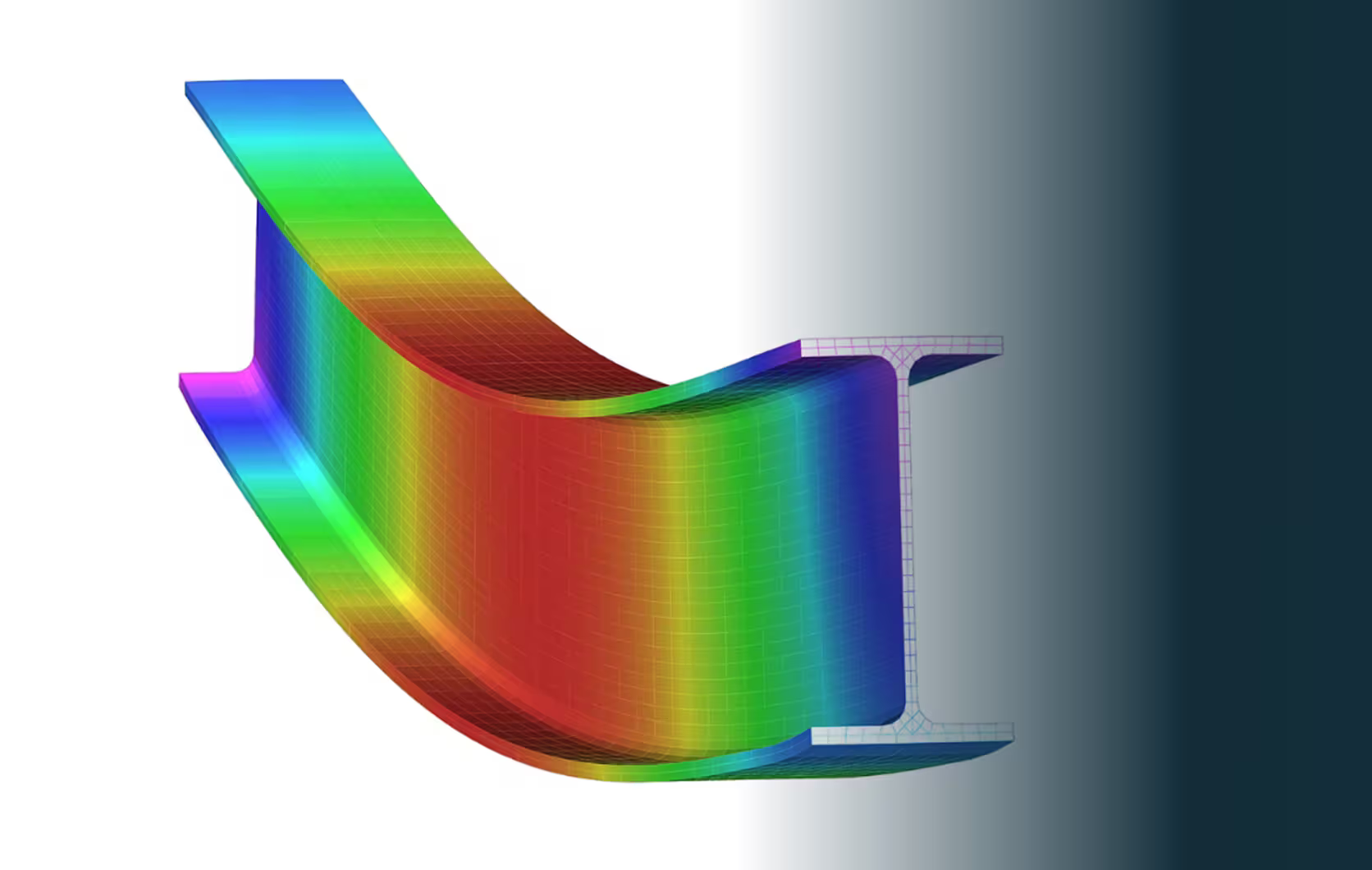
Finite Element Analysis (FEA), when combined with modal analysis, is a powerful duo, helping industries understand how machinery and structures respond to dynamic forces. FEA predicts natural frequencies and mode shapes based on a structure’s geometry, material properties, mass, and support conditions. Experimental modal testing measures the actual vibration response, enabling the maintenance teams to compare predicted and measured results. Differences in natural frequencies or mode shapes could mean underlying issues or inaccuracies in the model or potential structural weaknesses that require further investigation.
Experimental measurements complement and refine FEA models by identifying differences between simulated and actual structural behaviour. These findings are helpful to investigate issues such as reduced stiffness, loose connections, and changes in support conditions. When FEA is combined with modal testing and condition monitoring, it provides a more complete understanding of structural health.
This integrated approach tracks changes in vibration behaviour, identifies potential problems, prioritises inspections, and supports informed maintenance decisions. Technomax can apply these techniques to support structural assessments and improve industrial equipment reliability.
Read Our Case Study
Why Choose ACM for Modal Analysis and Condition Monitoring in UAE?
As an engineering company based in the UAE for over 2 decades, we focus on transforming industrial asset reliability through advanced predictive maintenance and efficient condition monitoring solutions. Our expertise includes vibration measurement and analysis, structural dynamic assessment, Finite Element Analysis (FEA), and partial discharge (PD) monitoring. By combining technical knowledge with advanced diagnostic technologies, we transform industrial equipment health monitoring, identify potential faults, and understand the underlying causes of machinery and structural issues.What sets us apart is our integrated approach to asset reliability, combining accurate measurements, in-depth engineering analysis, and practical knowledge to support informed maintenance decisions.
We help industries move towards proactive strategies that minimise unexpected downtime, improve equipment performance, and extend asset service life. Through our tailored solutions, we aim to enhance operational efficiency, reduce maintenance costs, and support safer, more reliable industrial operations.
Is your structure showing abnormal vibration or unexpected dynamic behaviour?
Don't wait for structural damage to become a major reliability issue.
ACM can help assess structural behaviour using modal analysis, vibration measurements, and engineering analysis to identify potential problems and support condition-based maintenance decisions.
Contact ACM to discuss your modal analysis and structural condition-monitoring requirements.