

Gearbox Vibration Analysis: How To Find Gear Faults Through Vibration Signals

Construction Vibration And Noise Monitoring UAE

What Is Pump Cavitation and How to Avoid It
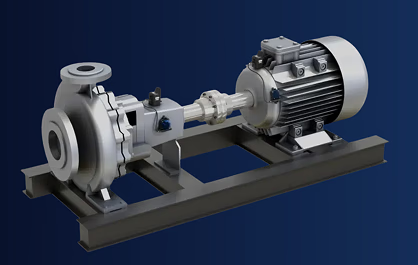
Why Pump Alignment Is Critical for Reliable Industrial Operations ?
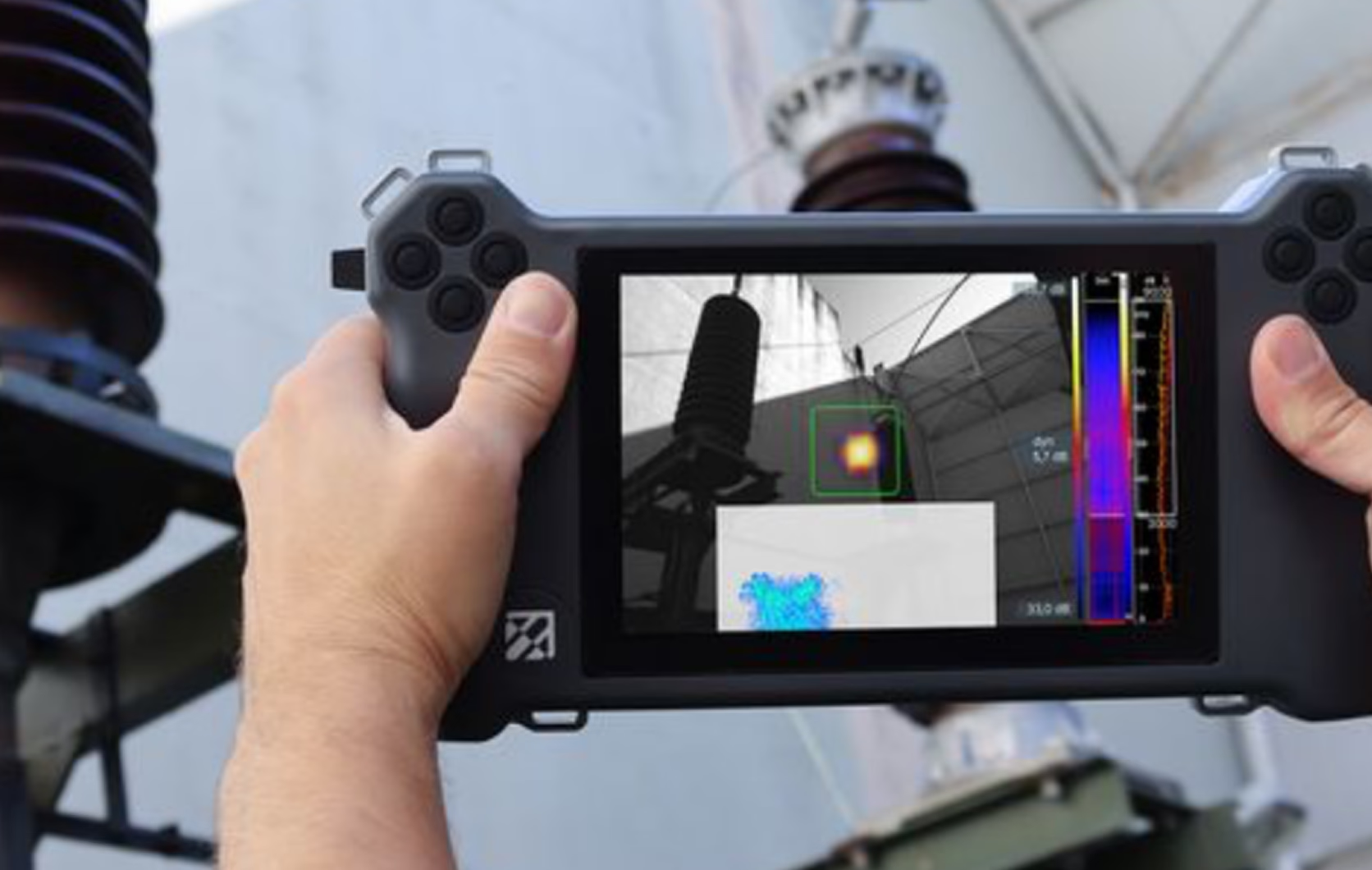
How Does an Acoustic Camera Work?
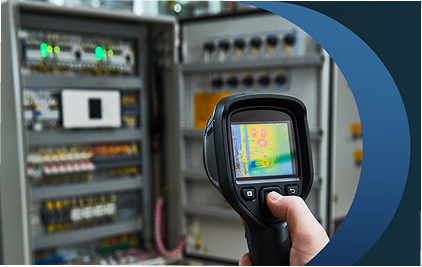
What is Infrared Thermography for Electrical Inspection?
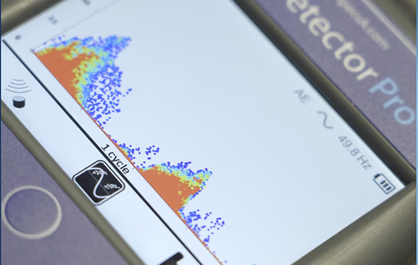
What is Partial Discharge Testing?
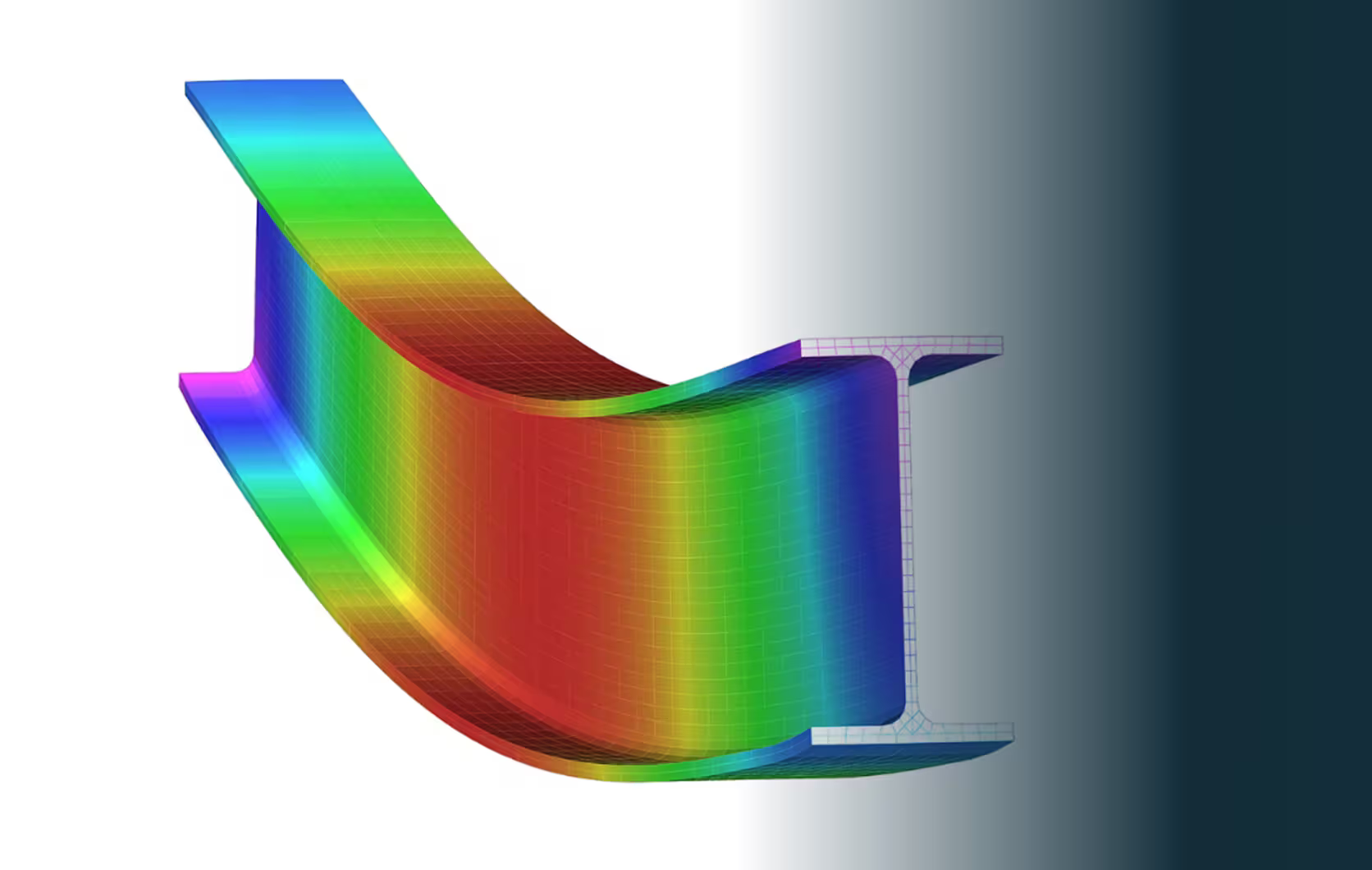
How FEA Analysis Improves Structural Performance & Reliability?
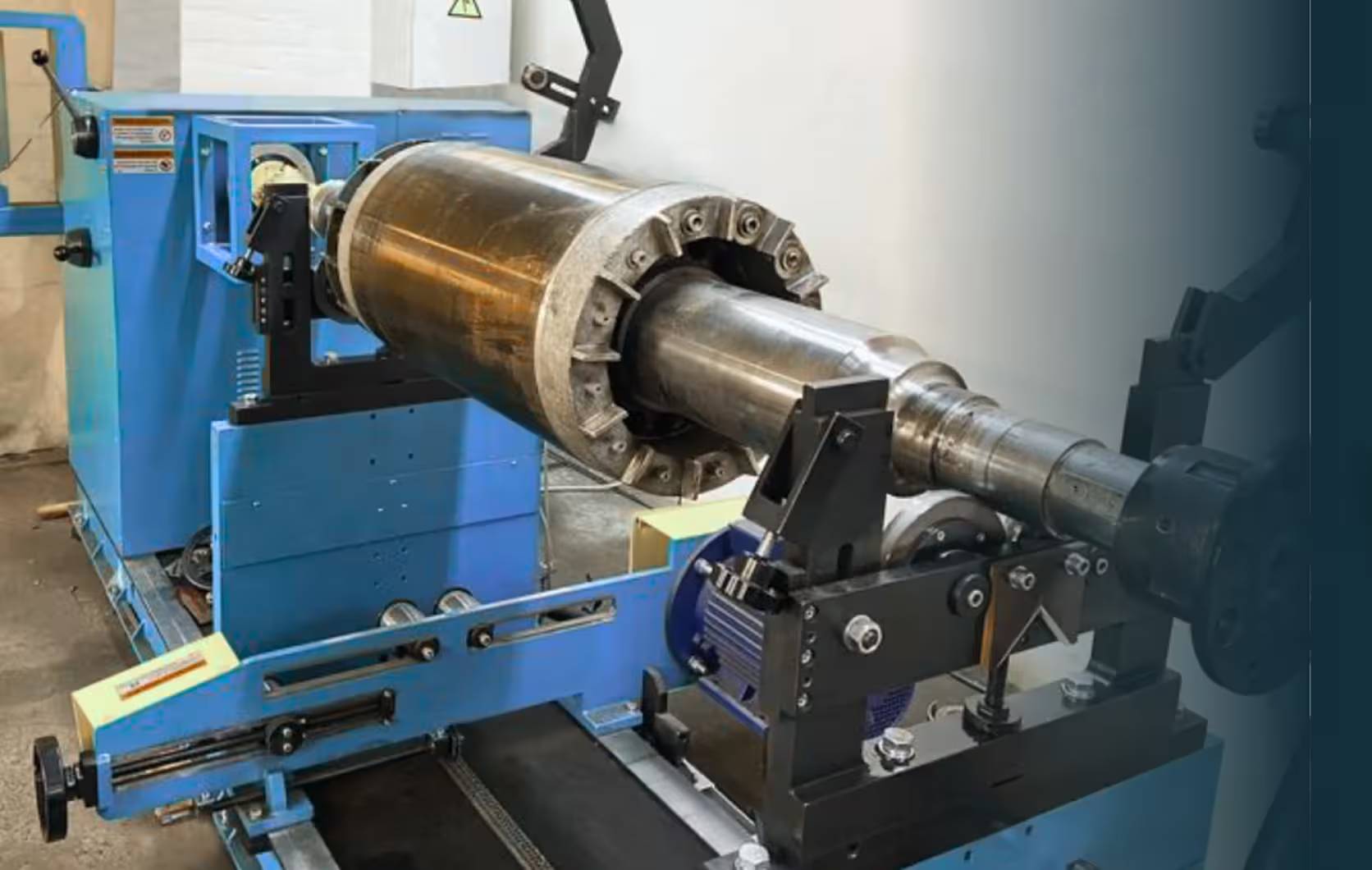
What is Dynamic Balancing: Why It Matters in Industrial Equipment
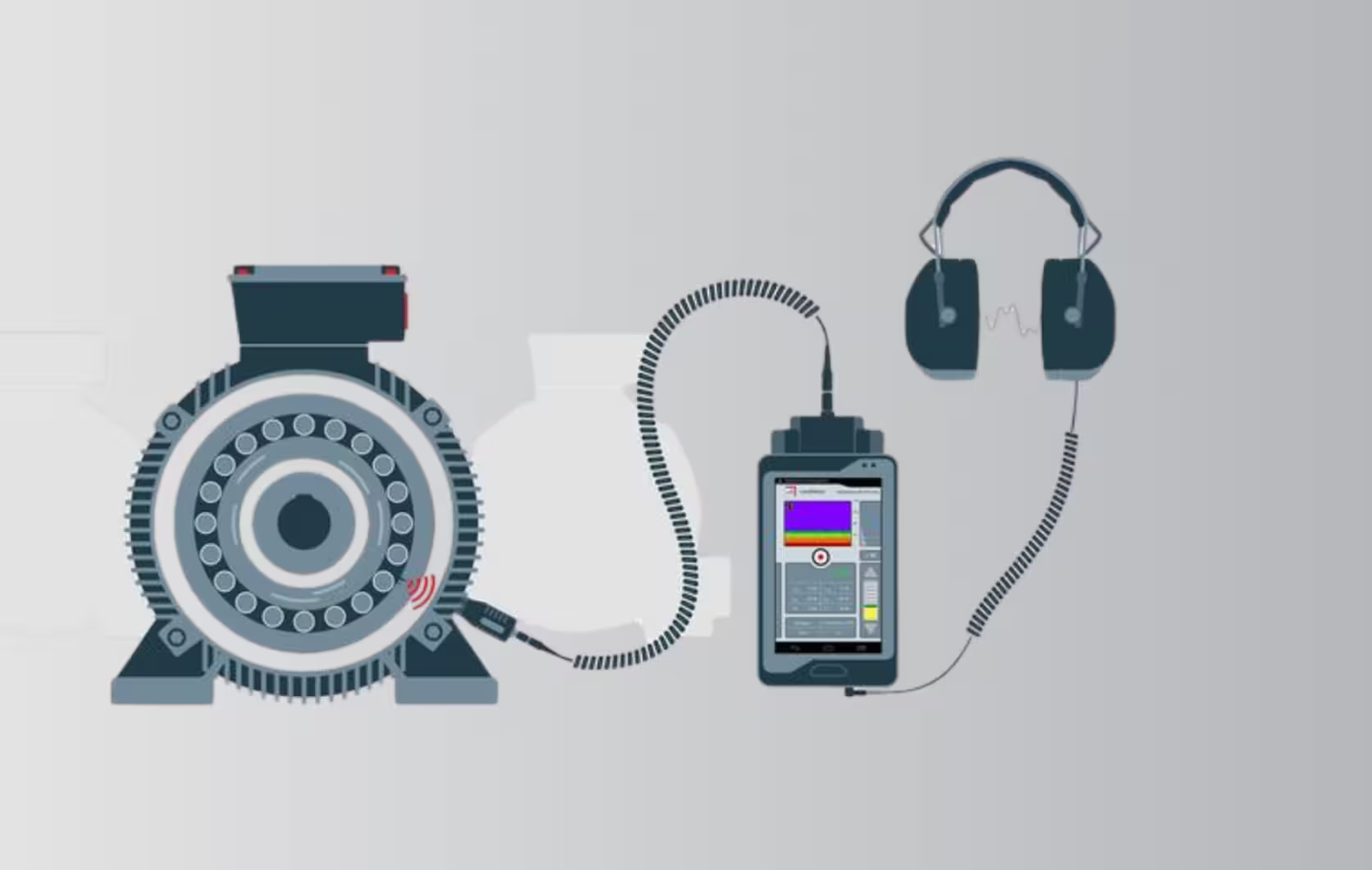
How Acoustic Emission Testing (AET) Detects Material Defects
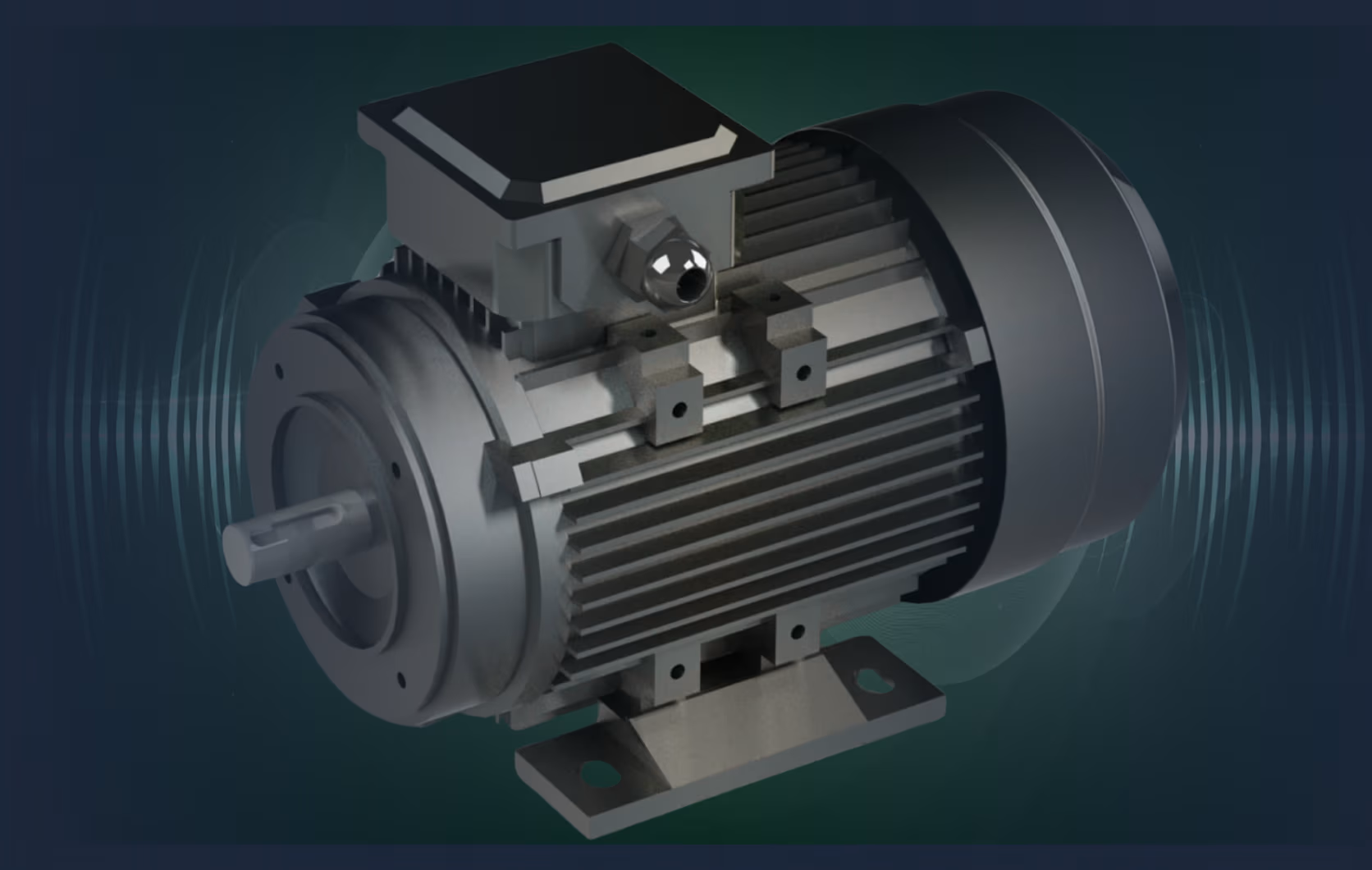
Vibration Sensors for Industrial Condition Monitoring: Types, Applications, and Benefits
Gearboxes, responsible for efficient mechanical transmission, managing speed, power and turning force, are integral to industries as it meets multi-faceted operational requirements for machinery. As gears work under regular contact and carry significant load, their condition as time passes can deteriorate.
Wear may look like a small change on the gear tooth surface, but gradually it can break even more and can develop serious damage that can affect the integrity of the gearbox, compromising its reliability and affecting machine performance in the bigger picture.
So, what is gear wear? Gear wear is the eventual collapse of material from the surface of a gear tooth while in operation. Gears are rugged and built with robust quality, designed to withstand repeated contact, but issues like not enough lubrication, contaminated oil, overloading, poor alignment and continuous operation increase friction and cause contact stress. This could alter and affect the shape and surface condition of the teeth, causing pitting, surface wear, scuffing, cracking or permanent damage.
These variations can create abnormal forces and affect the smooth transfer of motion through the gearbox. Even though failure happens abruptly, the root cause usually takes time to develop and cause significant damage. As gear teeth become worn or damaged, they no longer mesh smoothly, creating additional vibration, noise, friction, and dynamic forces within the gearbox.
Gear damage can affect overall machine performance by reducing efficiency, increasing stress on bearings and shafts, raising operating temperatures, and increasing the risk of unplanned downtime. Detecting these changes early is therefore essential for preventing more extensive damage.
Vibration analysis helps identify the abnormal vibration patterns produced by developing gear faults, making it an effective technique for detecting gear wear and damage before they lead to major gearbox failure.
Why Early Detection of Gear Wear Matters
Gear wear usually would not seize up all of a sudden; it often develops slowly. This is particularly beneficial for maintenance teams to identify and address the problem before it affects the entire gearbox. Noticing changes and detecting anomalies at an early stage prevents gear tooth surface damage from escalating into serious mechanical faults that can affect associated components and machine operation.
Using advanced condition monitoring services like vibration analysis, maintenance teams can strategically plan and schedule corrective actions based on the actual condition rather than waiting for it to conk out. Early detection gives many important benefits:
- Prevent severe gearbox failure: Early detection lets developing gear faults be corrected before they lead to complete gearbox failure.
- Reduce maintenance costs: Addressing faults early can avoid expensive emergency repairs and replacement of multiple damaged components.
- Enhance gearbox life: Timely maintenance prevents further deterioration of gears and helps the gearbox operate reliably for a longer period.
- Improve equipment reliability: Checking the gear condition ensures consistent machine performance and reduces the risk of unexpected breakdowns.
- Minimise production downtime: By detecting the faults early, the maintenance teams can schedule planned maintenance before a serious failure disrupts operations and causes unplanned production stoppages.
What Is Vibration Analysis in Gearboxes?
Vibration analysis is a special condition monitoring technique used to analyse the mechanical health of rotating equipment by measuring and interpreting the vibrations produced while running. In gearboxes, components such as gears, shafts, bearings, and couplings generate characteristic vibration patterns as they rotate and transmit power. When wear, damage, poor lubrication, misalignment, or other developing faults occur, these vibration patterns can change in amplitude, frequency, and overall behaviour, giving early signs that the gearbox condition is deteriorating.
Vibration analysis is significant for gearbox wear and fault detection, helping maintenance teams pick up anomalies before they develop into major failures. Vibration monitoring: Changes in gear mesh frequencies, running-speed components, harmonics, and sidebands can give important diagnostic clues relating to worn gear teeth, damaged teeth, excessive backlash, eccentricity, or bearing-related problems. By tracking these vibration signatures over time, technicians can understand fault progression and make more informed maintenance decisions.
How Vibration Analysis Works
Vibration analysis measures and interprets the vibrations produced by rotating equipment. Using a portable or real-time vibration analyser, the technicians collect vibration data from the gearbox and its related components. The mechanical component generates a unique vibration signature based on its operating speed, gear mesh frequency, load, and condition.
If a fault begins to develop, this signature changes, usually showing certain patterns associated with problems like gear tooth damage, imbalance, misalignment, bearing defects, looseness, or lubrication issues. By comparing these changes with the vibration characteristics that are known, engineers can identify the likely source and nature of the fault before it becomes a more serious equipment failure.
To accurately diagnose gearbox problems, vibration data can be checked using several analysis techniques, for example: frequency-domain and time-domain analysis, envelope analysis, order analysis, phase measurements, and orbit or circular plot analysis. These methods specifically help to separate different fault signatures and provide a clearer understanding of machine behaviour. Since gearbox failures may result from design problems, manufacturing defects, incorrect operating conditions, excessive loading, poor installation, or inadequate maintenance, vibration analysis gives deep insight into the condition of internal components, so maintenance teams can take corrective action at an early stage.
Why It Is Effective for Gearbox Condition Monitoring
Gearbox vibration analysis is the most reliable early warning system for rotating equipment faults in industrial plants, because it can detect changes in the mechanical condition of internal components while the equipment remains in operation. By tracking vibration levels and frequency signatures over time, maintenance teams can identify early signs of gear wear, damaged teeth, misalignment, imbalance, looseness, bearing defects, and lubrication-related problems before they lead to serious gearbox failure.
Most machinery runs without a hitch at first. However, wear and tear can take a toll on the asset over time. Conducting vibration analysis on gearboxes helps identify these early signs of wear, preventing unexpected failures, expensive downtime, and keeping equipment running smoothly. Vibration monitoring uses sensors to watch changes in different machines and equipment. When vibration levels increase, it often signals potential issues, such as emerging malfunctions, process limitations, or impending failures.
Another key advantage is that vibration analysis supports early and accurate fault diagnosis without dismantling the gearbox. Advanced techniques can help engineers distinguish between different fault types, determine their severity, and monitor how quickly a problem is developing.
This enables condition-based maintenance decisions, reduces unexpected downtime, prevents secondary damage to connected equipment, and helps extend the operational life of the gearbox. As a result, gearbox vibration analysis provides a reliable and proactive approach to maintaining the health and performance of rotating equipment.
How Vibration Analysis Detects Gear Wear and Damage
Vibration analysis detects gear wear and damage by monitoring changes in the vibration signals produced as gear teeth mesh during operation. Worn, cracked, chipped, or damaged teeth can create abnormal impacts and changes in gear mesh frequencies, harmonics, and vibration amplitude.
By analysing these patterns and tracking their progression over time, engineers can identify developing gear faults early and assess their severity before they lead to major gearbox failure.
Potential issues detected using Vibration Analysis in Gearboxes
The following are the most common issues detected using vibration analysis in gearboxes:
- Imbalance and Misalignment: Abnormal vibration patterns can indicate uneven rotating mass or incorrect shaft alignment that places additional stress on gearbox components.
- Excessive Wear: Increasing vibration levels and changes in frequency patterns can reveal progressive wear of gears, shafts, bearings, and other internal parts.
- Overloading Conditions: Unusual vibration amplitudes or changing operating signatures may indicate that the gearbox is experiencing loads beyond its intended operating range.
- Developing Bearing Faults: Characteristic vibration frequencies can help identify early-stage bearing damage before it progresses into a more serious failure.
- Installation Problems: Improper mounting, poor alignment, soft foot, or inadequate foundation support can produce vibration signatures that indicate installation-related issues.
- Manufacturing Defects: Irregular gear geometry, material defects, or assembly inaccuracies may create abnormal vibration patterns that can be detected during operation.
5 Gearbox Failure Modes Identified by Vibration Signature Analysis
Gearbox anomalies start to progress by producing subtle changes in vibration signatures before major distress becomes apparent. It is important to analyse these vibration patterns, and by carefully analysing these patterns, the engineers can understand the root cause, its severity and draft correction plans. These are the common failure modes revealed via vibration signature analysis.
- 1.Gear Tooth Wear and Damage: Changes in gear mesh frequencies, harmonics, and impact patterns might be due to worn, chipped, cracked, or damaged gear teeth.
- 2.Bearing Failure: Abnormal high-frequency vibration and characteristic bearing frequencies can show developing defects in the gearbox bearings.
- 3.Gear Misalignment: Increased vibration at gear mesh frequencies and their harmonics could mean improper alignment between mating gears or shafts.
- 4.Lubrication Problems: Changes in vibration and high-frequency activity due to inadequate, contaminated, or degraded lubricant can increase friction and component wear.
- 5.Shaft Imbalance or Mechanical Looseness: Powerful running-speed vibration or multiple harmonics can occur due to rotor imbalance, loose components, or inadequate mechanical fits within the gearbox.
How Gearbox Vibration Analysis Identifies Faults in Rotating Equipment
Gearbox vibration analysis spots developing faults by seeing how the machine responds mechanically during operation. Specialised sensors note and capture even subtle changes in vibration from gears, shafts, bearings, and other rotating components; this is particularly beneficial for engineers to compare the machine’s current behaviour with its normal operating condition.
Variations in vibration amplitude, frequency content, and impact patterns can reveal abnormalities that are not yet visible during a routine inspection. By interpreting these changes in relation to machine speed, load, and operating conditions, engineers can pinpoint potential fault sources, assess their progression, and determine if maintenance intervention may be required.
Gearbox Vibration Analysis in UAE with AssetConditionMonitoring.com
At Assetconditiomonitoring.com we provide advanced Gearbox Vibration Analysis services, detecting developing gear, bearing, and alignment issues before they become catastrophic failures. As part of our strategic predictive maintenance schedules, our team of expert engineers does gearbox vibration analysis to check the vibration levels and frequency patterns to identify any developing mechanical faults.
A baseline vibration signature is first set under normal operating conditions, making it easier to detect unusual changes later on. The collected data is then converted into a frequency spectrum to identify fault-related patterns, including changes in amplitudes, harmonics, and sidebands. With us, you can safeguard your gearboxes from failures and damage.
Protect your critical rotating equipment with professional Gearbox Vibration Analysis services. With advanced vibration monitoring and frequency spectrum analysis, industries can prevent gearbox problems before they result in unexpected equipment failure.
Contact our condition monitoring team today for an expert Gearbox Vibration Analysis and improve the reliability, performance, and operational life of your critical machinery.