

Construction Vibration And Noise Monitoring UAE

Gearbox Vibration Analysis: How To Find Gear Faults Through Vibration Signals

What Is Pump Cavitation and How to Avoid It
Why Pump Alignment Is Critical for Reliable Industrial Operations ?
How Does an Acoustic Camera Work?
What is Infrared Thermography for Electrical Inspection?
What is Partial Discharge Testing?
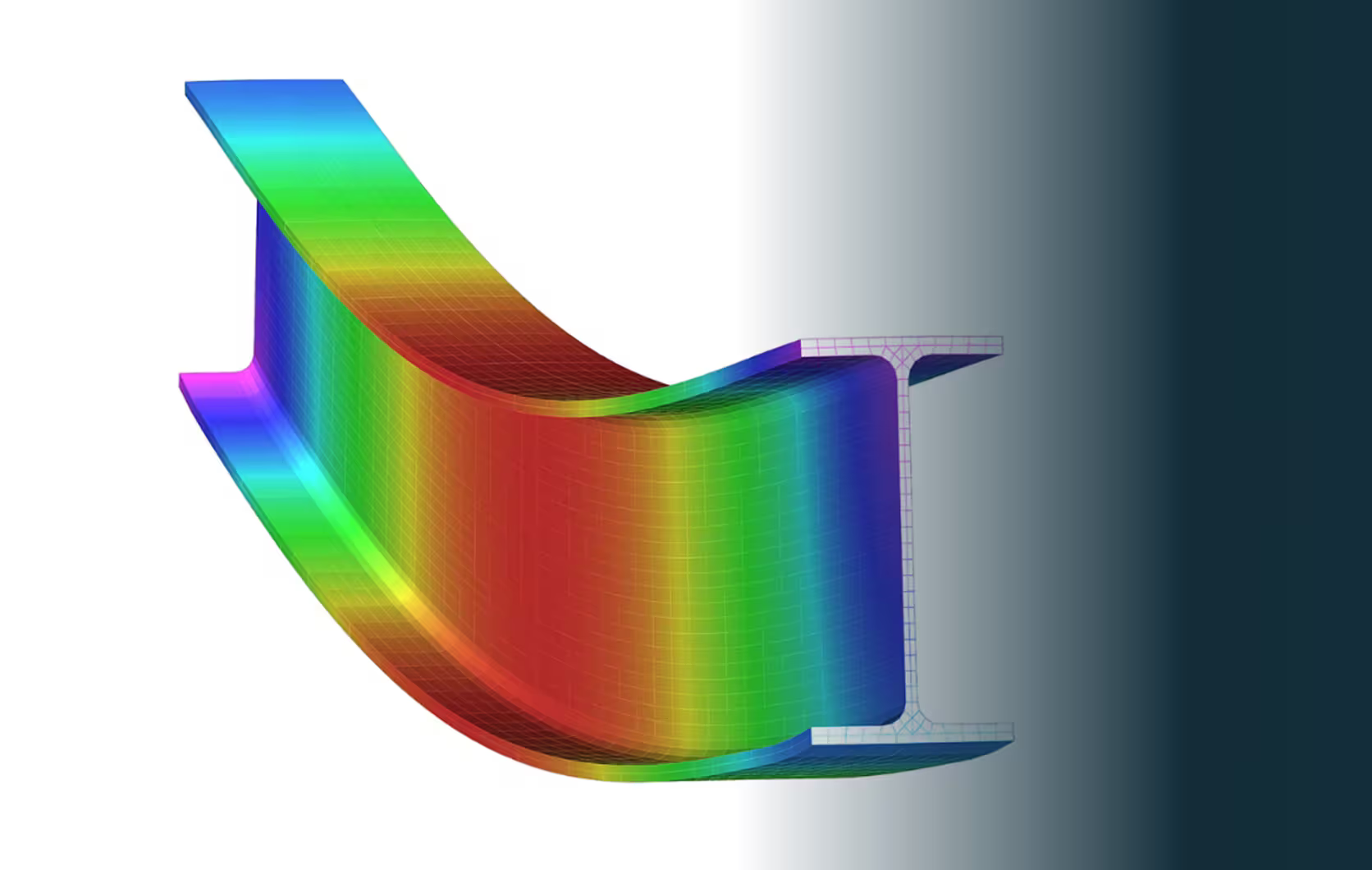
How FEA Analysis Improves Structural Performance & Reliability?
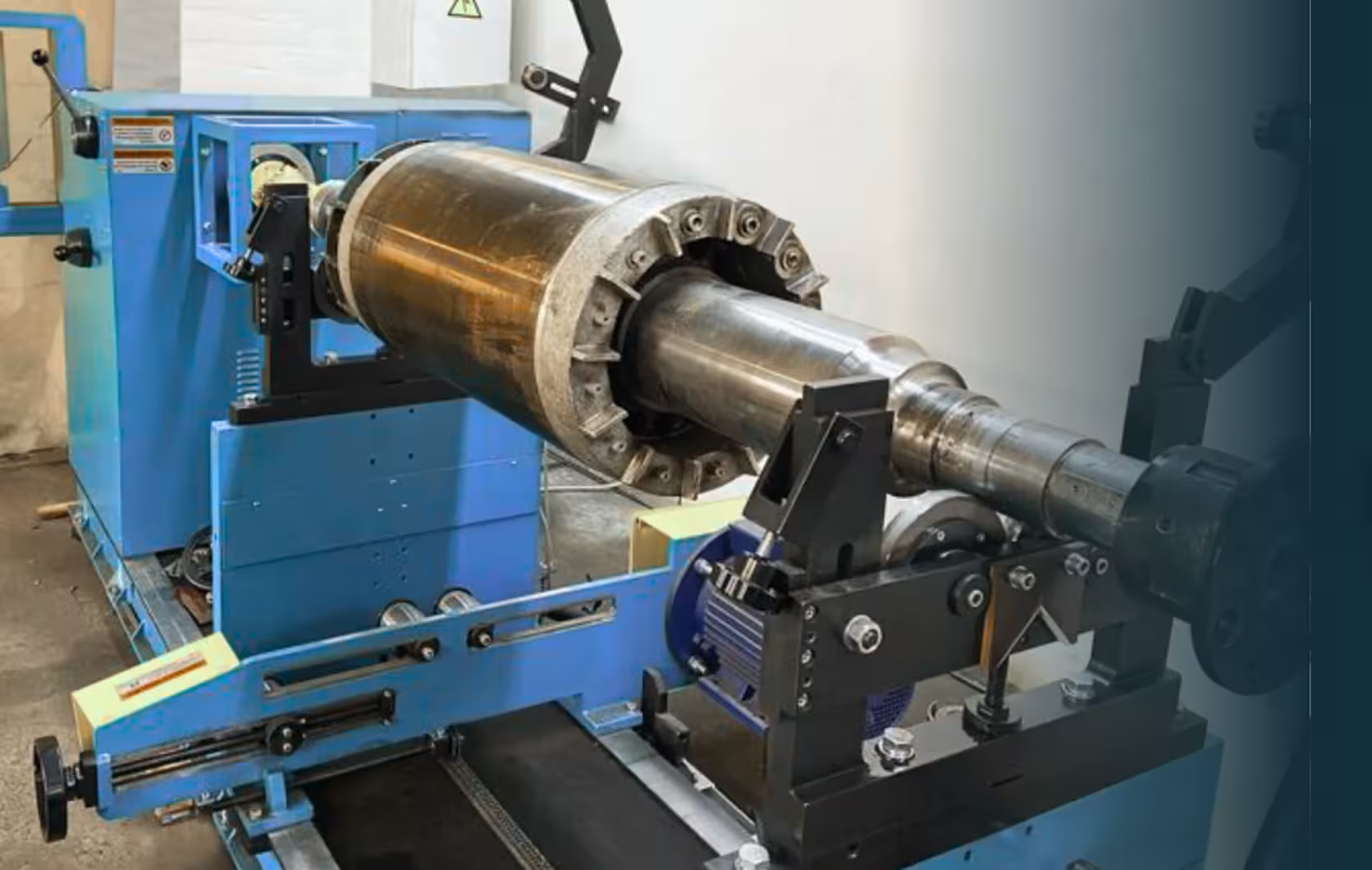
What is Dynamic Balancing: Why It Matters in Industrial Equipment
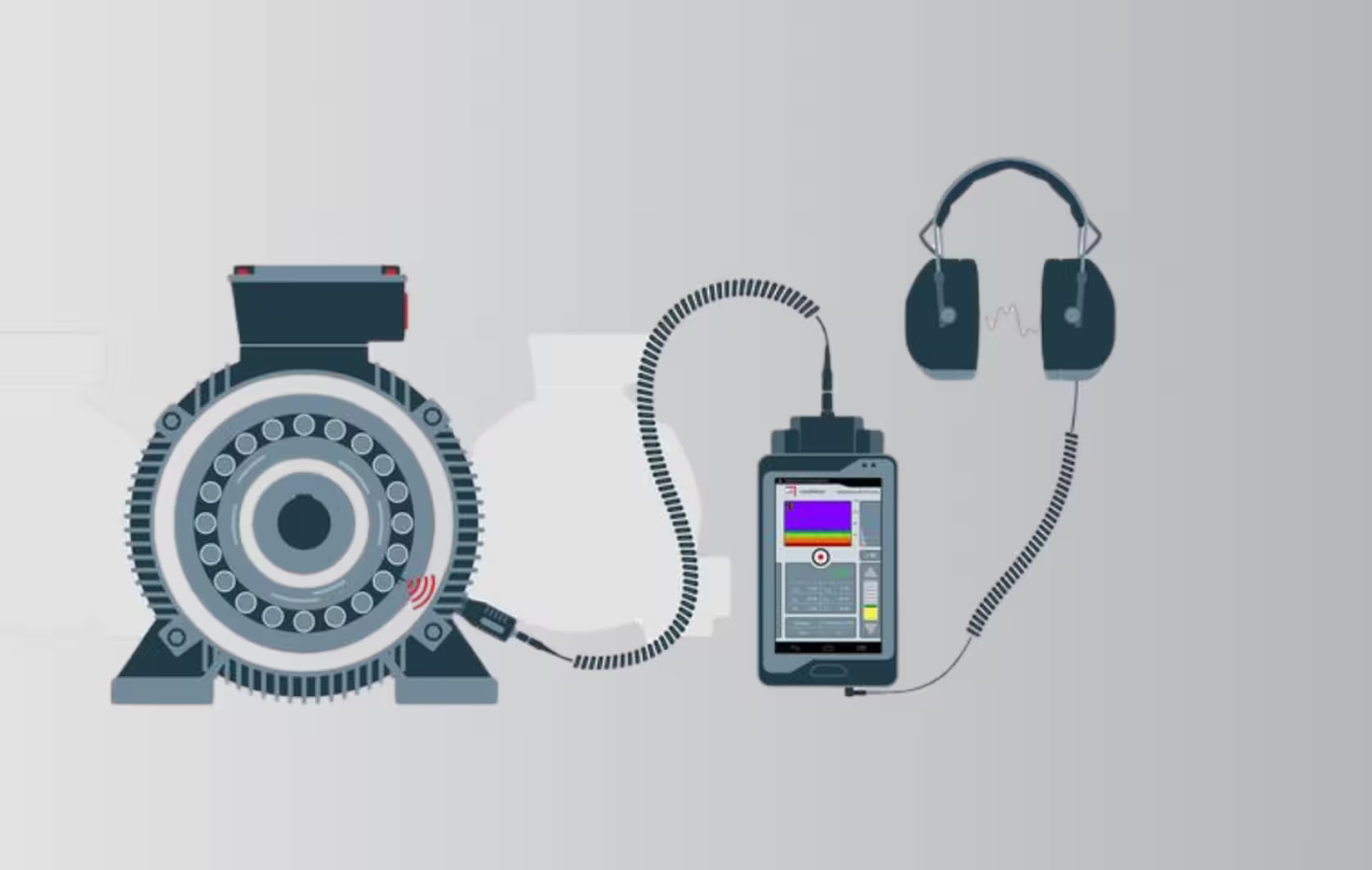
How Acoustic Emission Testing (AET) Detects Material Defects
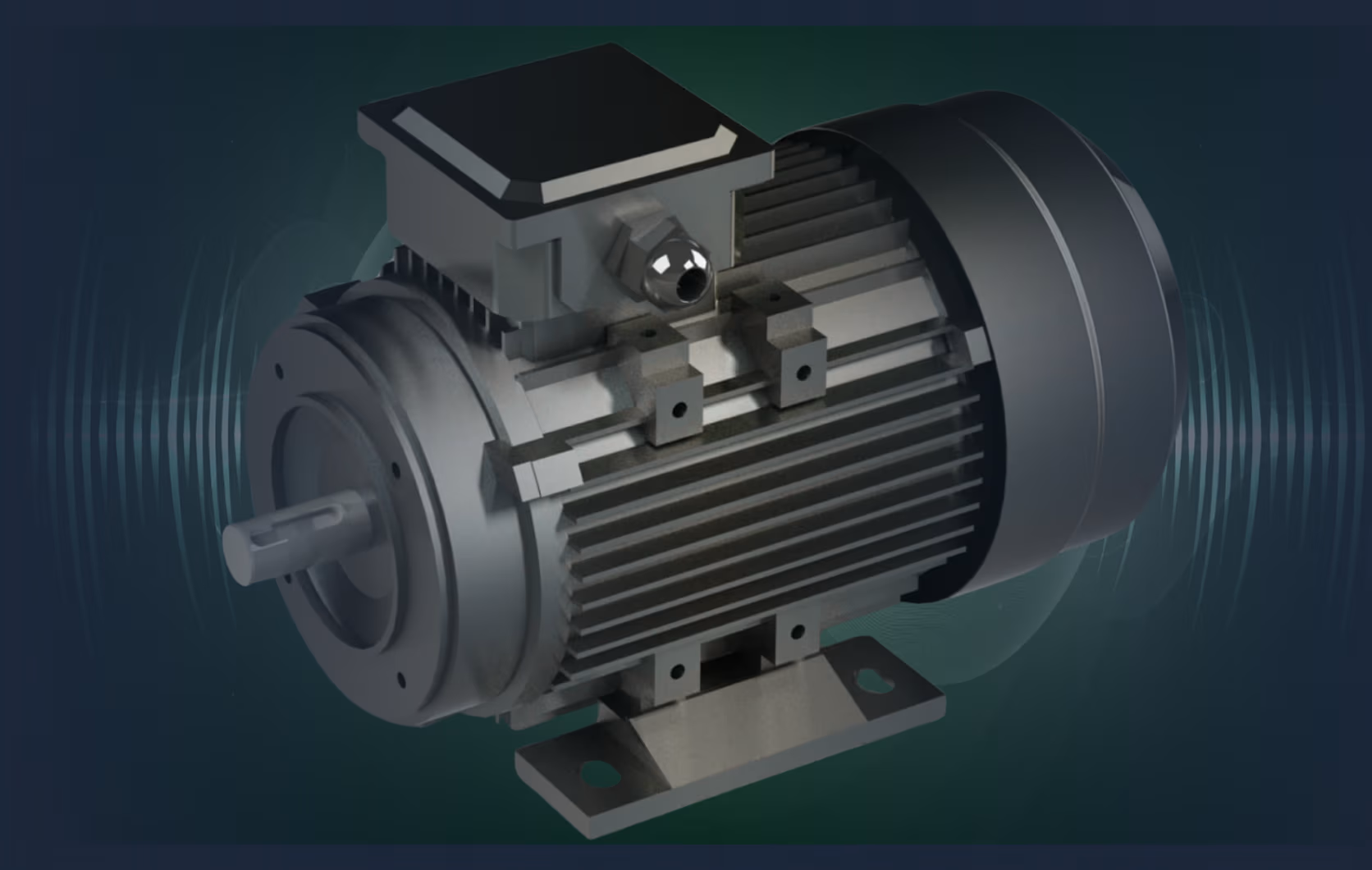
Vibration Sensors for Industrial Condition Monitoring: Types, Applications, and Benefits
Construction vibration and noise monitoring is the process of measuring, recording, and analyzing vibration levels and sound generated during construction activities to ensure they remain within acceptable regulatory and environmental limits. Activities such as piling, excavation, demolition, blasting, compaction, and heavy equipment operation can produce vibrations and noise that may affect nearby buildings, infrastructure, businesses, and communities.
Noise and vibration monitoring have become increasingly important in the UAE's construction industry as the country continues to set global standards in infrastructure development. Iconic skyscrapers and metro networks, airports, ports, industrial facilities, and smart cities, these large-scale construction projects are everyday normal in countries like UAE, so are the challenges posed by it. According to government initiatives and industry reports, billions of dollars are invested each year in infrastructure, transportation, and real estate projects to support long-term national development goals.
But, quick and dynamic construction scenarios involving activities such as piling, excavation, demolition, tunneling, rock breaking, and the operation of heavy machinery generate significant levels of noise and ground vibration. These impacts can go beyond the construction site, affecting nearby buildings, underground utilities, businesses, and residential communities.
If overlooked, intense vibration and noise can lead to structural damage, safety concerns, public complaints, project delays, and regulatory issues. High levels of noise in the workplace can cause permanent damage to workers' hearing, making proper monitoring and control essential in that aspect as well. To ensure and maintain a safe working environment industries must adopt strict guidelines and monitoring.
For these reasons, construction vibration and noise monitoring has become an essential part of responsible project management across the industries. Modern monitoring systems provide continuous, live data which are beneficial for contractors and project teams to detect potential issues early and take corrective action before they escalate.
By properly managing and monitoring the industrial activities that may involve significant noise generation, organisations can protect nearby structures, improve worker and public safety, comply with environmental regulations, and minimize disruption to the surrounding.
In this article, we will explore why construction vibration and noise monitoring is essential, the industries and construction activities that require it, the regulations, different equipment available and technologies used. We will also see the best practices that help guarantee safer, more efficient, and environmentally responsible industrial activities.
What is Construction Noise Monitoring?
Construction noise monitoring is simply the process of measuring, recording and analysing the sound generated in construction sites due various activities. Special devices, sound level meters and ground monitoring stations are installed around project sites to monitor noise levels throughout the project.
The monitoring and recording of these data is particularly important because there are strict rules to managing and monitoring noise and vibration in worksites. With the collected data the project team and contractors can ensure the construction activities stay within allowed noise limits and avoid compromising the safety of the neighbourhood.
Construction sites usually are prone to noise and excessive vibration because of the frequent use of heavy machinery such as excavators, bulldozers, cranes, jackhammers, piling rigs, trucks, concrete mixers and whatnot. The drilling, piling, rigging, demolitioning, and at times blasting all involve generating a considerable amount of noise and vibration. The noise level could go from 70 dB(A) to over 100 dB for high-impact processes. Continuous exposure to these levels of noises means having lasting hearing damage and disturbing surrounding lives.
So, monitoring and tackling noise and vibration is imperative in the perspective of communities and the government’s strict regulations. There are different ways to manage these challenges. For instance, there are spot measurements and continuous measurements. Spot measurements, as the name suggests, are quick and one time; where noise readings are done at specific time providing only a quick glimpse of site noise levels. This could be beneficial for inspection but falls short as the construction activities vary all throughout.
Continuous monitoring, on the other hand, is recording and monitoring the noise and vibration levels around the clock, this gives a more comprehensive outlook of the actual site conditions. Advanced monitoring systems can alert project teams when the noise level breaks the set thresholds, allowing immediate actions before complaints or compliance issues arise.
Why Construction Vibration and Noise Monitoring is Important in the UAE
- Protect Nearby Structures:
In countries like UAE, where buildings are closely built, the intense vibrations and noise levels from the new constructions could cause structural damage to nearby buildings, this involves historic buildings, iconic landmarks, residential properties, commercial complexes and critical infrastructure. By properly tracking vibration and noise levels, project teams can ensure proper construction and integrity of surroundings.
- Ensure Worker Safety:
Monitoring noise levels and vibrations is critical when considering the workers safety. Continuous exposure to loud noises can impair the hearing, cause confusions, reduce concentration and result in lasting damages, hence, proper monitoring and managing of noise and vibration levels are imperative to creating a safer working environment for onsite workers.
- Minimise Community Disturbance
Keeping noise and vibration under control reduces disruption is extremely important for nearby residents, businesses, schools, and healthcare facilities. It is essential to keep the noise and vibration levels within the threshold in order to make sure the communities are not affected by new constructions or renovations.
- Prevent Equipment Damage:
Tracking and keeping tabs on excessive vibration that affects the operational equipment, can help detect conditions that may escalate wear or affect the performance of construction equipment.
- Avoid Project Delays:
because of the intense vibration and noise levels, the operations could be disrupted and hindered to comply with regulations. Early detection of issues allows corrective action to be taken before they lead to work stoppages or schedule disruptions.
- Reduce Legal Risks:
Proper monitoring and recording provide documented evidence of compliance, proving to be beneficial if a dispute arises and it also supports regulatory requirements.
UAE Regulations and Environmental Compliance
Construction vibration and noise monitoring in UAE is a hot topic, because construction project teams are expected to follow rules and meet strict environmental and safety requirements. These rules are in place to protect the people, property and the environment or in simple terms , the economy as whole.
Government authorities and local municipalities have established clear terms and guidelines to control construction-related noise and vibration, particularly for projects set near residential communities, commercial developments, schools, hospitals, and other sensitive areas. Complying with these requirements is both required for legal obligation as well as to ensure corporate social responsibility and sustainability in construction practices.
EIA (Environmental Impact Assessments) are to be done before many construction projects begin, this is carried out to identify potential environmental risks and to foresee proper mitigation actions. Depending on the project's location, size, and scope, authorities may also specify monitoring requirements, including acceptable noise and vibration limits, monitoring locations, and reporting frequency.
Keeping accurate monitoring records on the project proves to be valuable evidence to ensure compliance, support inspection processes and help contractor and project teams to respond effectively to any concerns raised by authorities, clients or nearby communities.
Industries That Require Construction Vibration and Noise Monitoring
- Infrastructure projects
- Metro and railway construction
- Roads and bridges
- High-rise buildings
- Oil & gas facilities
- Airports
- Ports and marine construction
- Utility projects
- Industrial plants
Types of Construction Activities That Need Monitoring
Some construction activities generate significant levels of noise and vibration that need close monitoring. Without proper oversight, they can damage nearby structures, affect the surrounding environment, disrupt local communities, and increase safety and compliance risks. The following activities are some of the common high-impact activities that need proper monitoring and strict adherence to rules and regulations.
- Pile Driving:
PileDriving generates high-impact ground vibrations and noise that can affect nearby structures and disturb surrounding communities, hence, continuous monitoring is essential.
- Sheet Piling:
Produces repetitive vibrations and increased noise levels during installation and extraction, this calls for close monitoring to prevent damage to nearby infrastructure.
- Rock Breaking:
Creates intense vibrations and loud noise that can impact nearby buildings, utilities, and workers if not done in a controlled manner.
- Demolition:
Demolition is done using heavy equipment and structural collapse generates unpredictable vibration and noise levels that should be continuously monitored for safety.
- Excavation:
Deep excavation activities can cause severe ground movement and equipment-induced noise, making monitoring important to protect close-by structures and underground services.
- Tunnel Construction:
Tunnelling and drilling generate underground vibrations and noise that must be monitored to protect nearby buildings and critical infrastructure.
- Soil Compaction:
Compaction equipment puts repetitive vibrations into the ground, which can affect surrounding structures if vibration levels exceed acceptable limits.
- Blasting:
Produces sudden, high-intensity vibrations and air overpressure, this necessitates precise noise and vibration monitoring to ensure compliance with safety and regulatory limits.
- Heavy Lifting Operations:
The movement and operation of cranes and other heavy lifting equipment can generate localised vibrations and operational noise that should be monitored to maintain safe on site working conditions.
Importance of Real-time Monitoring in Construction Activities
Vibration monitoring is vital to examine how ground vibrations affect structures in the proximity.Vibration and noise monitoring is done through highly sensitive sensors because the construction activities generate a considerable level of low-frequency vibration that has substantial energy that can be carried to the ground causing risks to adjacent structures, underground utilities such as pipes, gas lines, power lines.
Low-frequency vibrations require particular attention because the resonance frequencies of many building constructions usually is around or below 8 Hz,it is important to control the frequencies that lie below 12 Hz; as buildings are susceptible to damages from these lower frequencies. Online monitoring with the help of highly-sensitive sensors helps prevent these hidden problems by continuously monitoring the vibration; this allows for quick intervention and corrective actions before the activities cause the amplitude to reach damaging levels.
Key Parameters Measured During Monitoring
Vibration Parameters
Peak Particle Velocity (PPV) checks the maximum speed at which the ground moves during a vibration event. It is an indicator to assess the impact of construction vibrations on nearby structures.
Frequency shows how rapidly vibration waves oscillate and is measured in Hertz (Hz). Understanding frequency helps to study how different structures may respond to construction-caused vibrations.
Acceleration measures how fast the vibration velocity changes over time. It is particularly beneficial for evaluating the effects of sudden impacts and dynamic loads on sensitive equipment and structures.
Velocity indicates the rate at which a vibrating object or ground surface moves. It shows the intensity of vibrations and their potential to affect surrounding structures.
Displacement measures the distance an object or the ground moves from its original position during vibration activities. This parameter shows the extent of ground movement caused by construction activities.
Noise Parameters
dB(A) is the standard unit used to measure sound levels based on the sensitivity of the human ear. dB(A) can be the accurate representation of how loud construction noise is perceived by people.
Leq gives the average noise level over a specified monitoring period. It proves to be a reliable indicator of overall noise exposure during construction activities.
Lmax records the highest sound level measured during a monitoring period. It helps identify short-duration noise events that exceed permissible limits.
Peak noise levels measure the highest instant sound generated by activities such as blasting, demolition, or pile driving. Monitoring these peaks helps assess the risk of sudden noise impacts on workers and nearby communities.
Time-weighted averages calculate the average noise exposure over a defined period, taking sound level and duration into consideration. This measurement is commonly used to evaluate occupational noise exposure and ensure compliance with workplace safety regulations.
Equipment Used for Construction Noise and Vibration Monitoring
- 1.SOUND LEVEL MONITOR: EM2030
EM2030 Sound Level monitor by Sonitus Systems is an advanced vibration and noise monitoring tool designed for accurate and reliable noise level monitoring.
- broad dynamic range with high precision for accurate sound level measurements
- sound capture and real-time data recording for reliable noise analysis
- Sonitus Cloud integration for smart and automated reporting with advanced data insights
- Robust and rugged, design with battery options for indoor and outdoor monitoring, compatible with harsh environments
2. BOUNDARY MONITORING: DM30N Sitesens
DM30N Sitesens is an advanced and innovative dual-functioning device for complete boundary monitoring. This tool is suitable for measuring air quality and noise levels, both performing simultaneously.
- High-sensitive and high precision sensors built for robust and durable applications
- Compatible in harsh and challenging industrial settings
- Reliable wireless connectivity for remote access and real-time monitoring
- Sonitus Cloud data for centralised data management
- Offers comprehensive environmental data ensuring compliance and safety
3. SOUND LEVEL MONITORING:
AS180 Sonisens is high-precision and robust indoor sound level measurement instrument that is ideal for precision and reliable noise monitoring. It is designed with advanced microphone and data logging capabilities. The following are the features of AS180 Sonisens:
- Easy integration with Sonitus Cloud for real time data and smart reporting
- Precise measurements for industrial and commercial noise monitoring
- Dependable performance for regulatory compliance and noise management efficiency
- Easy to use, compact, intuitive and user-friendly design for professional and precise noise monitoring
AIR QUALITY MONITORING: DM30 Dustsens
The DM30 Dustsens Particulate Monitor is an automated monitoring solution developed to continuously measure airborne particulate levels and provide reliable, real-time information on surrounding air quality. Its robust design and connected monitoring capabilities make it suitable for environments where effective dust control and environmental oversight are essential.
- High-precision particle monitoring: Uses advanced optical sensing technology to detect and measure airborne particulate matter with consistent accuracy.
- Continuous cloud connectivity: Sends monitoring data to the Sonitus Cloud platform, enabling real-time access, data tracking, and analysis.
- Built for demanding conditions: Features a durable, compact, and weather-resistant construction for reliable operation in challenging outdoor environments.
- Suitable for multiple industries: Well suited for construction sites, mining operations, manufacturing facilities, and other areas where dust levels need to be closely controlled.
- Supports environmental compliance: Provides timely particulate data that helps organisations assess dust conditions, improve control measures, and maintain effective environmental management practices.
Benefits of Online Noise and Vibration Monitoring
Online noise and vibration monitoring allows for continuous visibility into environmental conditions. Noise and vibration monitoring is particularly beneficial as it detects issues early, improves compliance, and maintains accurate records with less manual effort. Not only for environmental conditions it is also essential to ensure compliance and strict adherence to safety standards.
- Real-Time Alerts when noise levels goes over the limit
- 24/7 Continuous Noise and Vibration Monitoring
- Instant alerts and Notifications for Critical Events
- Historical Trends for Better and Reliable Analysis
- Automated Reporting for Easy Documentation
- Reduced Need for Manual Inspections
- Improved Project Records and Documentation
Best Practices for Construction Vibration and Noise Monitoring
- Baseline Surveys: Carry out the basic noise and vibration measurements before actual construction begins. This provides a reference parameter for comparing changes and the level of deviations during the project.
- Identify Sensitive Structures: clearly map out nearby buildings, utilities, heritage structures, and other areas that could be affected by construction activities. This will help in deciding where closer monitoring may be required.
- Select Appropriate Sensor Locations: Place monitoring sensors at suitable locations based on construction activities and surrounding conditions. Proper positioning is important for reliable and representative measurements.
- Establish Threshold Limits: Set acceptable noise and vibration limits according to project requirements and applicable standards. These limits are important when construction activities may require corrective action.
- Continuous Monitoring During Critical Activities: Monitor noise and vibration continuously during activities like piling, demolition, and heavy excavation. Real-time data is beneficial when carrying out critical activities, to adopt corrective actions.
- Regular Calibration of Instruments: Check and calibrate monitoring equipment at pre-scheduled intervals to maintain measurement accuracy. Properly maintained instruments give data that are reliable throughout the project.
- Maintain Accurate Reports: Keep clear records of monitoring data, alerts, equipment checks, and corrective actions. Properly maintained reports means proper compliance, project documentation, and future analysis.
Challenges in Construction Monitoring
Urban Construction Environments: Densely built buildings, traffic, and nearby activities can make it difficult to separate construction-related noise and vibration from background levels.
Weather Conditions: Wind, rain, and changing atmospheric conditions can adversely influence noise measurements and affect sensor performance.
Data Interpretation:significant volumes of monitoring data can be hard to analyse, especially when identifying unusual patterns or determining the source of changes.
Sensor Placement: Incorrect sensor positioning can give incorrect or unreliable readings, making proper selection and installation of monitoring points is essential.
Temporary Site Changes: Changes in construction activities, equipment locations, and site layouts may require monitoring points to be regularly reviewed and adjusted.
Choosing the Right Construction Monitoring Partner in the UAE
Construction vibration and noise monitoring in the UAE is of high-importance as for maintaining safety, protecting nearby structures, and ensuring smooth project execution. A dependable provider should have proven experience with UAE construction projects and understand local site conditions and compliance requirements. Employing certified and properly calibrated monitoring equipment is also essential for achieving accurate and dependable measurements. Skilled, proficient and seasoned technicians and engineers who can correctly install sensors, interpret monitoring data, and identify potential risks must be assigned to these critical tasks; they can help in preventing issues before the issues become serious.
Real-time monitoring capability is another important decisive factor, especially for projects involving vibration, noise, dust, or other environmental impacts. A good condition monitoring provider should give clear and detailed reports that help project teams understand trends, incidents, and compliance status. Fast technical support is equally important when alerts or unexpected readings require immediate attention. By choosing a partner with strong technical expertise, reliable equipment, responsive support, and thorough knowledge of UAE regulations, construction companies can mitigate and tackle risks more effectively and maintain better control over their projects.
Why Choose assetconditionmonitoring.com for Construction Vibration and Noise Monitoring in UAE
assetconditionmonitoring.com with advanced monitoring solutions provide real-time data, accurate measurement, comprehensive reporting and tailored solutions for different construction projects. Our innovative and advanced condition monitoring solutions are carefully designed to support the industries across the UAE.
Our monitoring services help construction projects achieve accurate measurements, maintain effective site control, and meet applicable UAE rules and regulations. With real-time data, precise monitoring, comprehensive reporting, and project-specific solutions, we support construction teams in identifying potential risks and taking timely corrective actions.
Advanced noise and vibration monitoring solutions from industry leading assetconditionmonitoring.com, with global-standard equipment backed by a team of experienced technical team to ensure proper monitoring and adherence to rules and regulations in the UAE construction field. AssetConditionMonitoring.com provides advanced noise and vibration monitoring solutions using industry-leading, globally recognized equipment and supported by an experienced technical team.
Our solutions are designed to meet the demands of a wide range of construction and infrastructure projects across the UAE. From high-rise developments and road works to excavation, demolition, piling, and other high-impact activities, our monitoring systems provide reliable data throughout critical project stages. By combining advanced technology with technical expertise, AssetConditionMonitoring.com helps clients improve safety, safeguard surrounding structures, reduce environmental disturbance, and maintain proper project documentation.
Ensure Accurate Construction Noise & Vibration Monitoring in the UAE
Safeguard your construction project, workers, and surrounding environment with reliable construction vibration and noise monitoring in the UAE. From noise monitoring and environmental noise monitoring equipment to accurate noise level monitoring in UAE, AssetConditionMonitoring.com provides real-time data, detailed reporting, and professional technical support to help you meet project and regulatory requirements.
Construction vibration and noise monitoring is critical in maintaining safe, responsible, and efficient construction activities across the UAE construction and infrastructure market. By continuously tracking vibration and noise levels, project teams can identify potential risks early, protect nearby buildings and infrastructure, reduce disturbance to surrounding communities, and support a safer working environment.
Adopting proactive monitoring practices also helps construction companies align with applicable regulations and project requirements and reduces the chances of unexpected issues and costly delays. With reliable monitoring systems, real-time alerts, and accurate reporting, construction teams can make informed decisions and maintain better control throughout different stages of their projects.
Need reliable monitoring for your construction project? Contact our experts today to discuss your noise and vibration monitoring requirements.